

Transform your living space into a serene retreat by starting with the principle of ma, the Japanese concept of negative space. Instead of filling every corner, allow breathing room between furniture pieces and decorative elements. This intentional emptiness creates visual calm and lets each item shine on its own merit.
Natural materials form the backbone of authentic Japanese interiors. Replace synthetic textiles with linen curtains, swap plastic organizers for bamboo alternatives, and consider tatami mats or rush floor coverings in low-traffic areas. Wood should appear in its honest form, showcasing grain patterns rather than hiding beneath heavy stains or paint. Look for pieces in light oak, cypress, or walnut that bring warmth without overwhelming a room.
Embrace low-profile furniture to shift your perspective and create the grounded feeling characteristic of traditional Japanese homes. Floor cushions, low coffee tables, and platform beds change how you experience space, making even modest rooms feel more expansive. You don’t need to commit fully to floor seating. Start with one area, perhaps a reading nook with a zabuton cushion and a short-legged table.
The color palette stays deliberately restrained. Anchor your rooms in neutrals like cream, beige, soft gray, and natural wood tones, then introduce depth through texture rather than bold hues. A single accent in deep indigo, forest green, or terracotta can reference nature without disrupting the peaceful atmosphere. Think of cherry blossoms against bare branches or moss on stone, where one thoughtful pop of color creates more impact than a rainbow of competing shades.
Shoji-inspired elements offer an accessible entry point for 2026. Retrofit existing doors with frosted glass panels, hang room dividers with translucent rice paper screens, or simply frame shoji paper as wall art. These features filter light beautifully while maintaining privacy and adding architectural interest.
What Makes Japanese Decor Different (And Why It Works)
Japanese decor isn’t just about aesthetics, it’s rooted in centuries-old philosophies that shape every design decision. Where Western interiors often emphasize filling space and showcasing possessions, Japanese design champions restraint and intentionality. Understanding these foundational principles helps explain why this approach creates homes that feel both calming and deeply functional.
At the heart of Japanese interior design are concepts that guide everything from furniture selection to spatial arrangement:
- Wabi-Sabi
- The appreciation of imperfection and impermanence. This philosophy celebrates natural materials that age gracefully, handcrafted items with visible irregularities, and the beauty found in simplicity rather than perfection.
- Ma
- The intentional use of negative space and intervals. Ma treats emptiness as an essential design element, creating breathing room that allows each object and architectural feature to be fully appreciated.
- Kanso
- The principle of simplicity and elimination of clutter. Kanso guides you to keep only what serves a purpose or brings genuine joy, resulting in spaces that feel unencumbered and purposeful.
- Shizen
- Naturalness and the avoidance of artificiality. This principle emphasizes organic materials, natural light, and designs that honor rather than conceal the inherent qualities of wood, stone, and fiber.
These wabi-sabi and ma principles translate into practical choices you can implement immediately. Instead of filling every surface, you might display a single ceramic vase on a low table. Rather than covering windows with heavy treatments, you’d use shoji screens that filter light softly. The wood grain on furniture remains visible and celebrated instead of painted over.
The contrast with typical Western design becomes clear when you compare approaches. Western rooms often feature high, upholstered furniture arranged around focal points like televisions or fireplaces. Japanese spaces use low-profile pieces that maintain sightlines and emphasize horizontal rather than vertical elements. Where Western design might add decorative molding, Japanese design strips away ornamentation to reveal clean lines and material honesty.
This philosophy works because it addresses modern needs we didn’t even know we had. The visual quiet reduces decision fatigue. The natural materials improve air quality and create tactile warmth. The emphasis on negative space makes rooms feel larger without requiring more square footage. You’re not just decorating, you’re creating an environment that actively supports your wellbeing.
Essential Elements to Bring Japanese Style Into Your Home
Furniture That Anchors the Look
Low-profile furniture defines the foundation of Japanese interior design, creating visual calm through horizontal lines and deliberate restraint. Platform beds sit close to the floor, often made from solid wood with clean edges and minimal ornamentation, expect to invest $400 to $1,200 for quality pieces that will anchor your bedroom for years. These beds eliminate the need for bulky box springs and create an uncluttered silhouette that makes rooms feel more spacious.
Tatami-inspired seating brings authentic Japanese living to modern homes. Floor cushions (zabuton) paired with low tables transform living rooms into flexible spaces for dining, working, or relaxing. Many homeowners start with a single low table and cushions ($80 to $300 for a set) before committing to larger furniture changes. This approach lets you test the aesthetic without overwhelming your existing setup.
Shoji screens serve as room dividers, window treatments, or decorative panels. Traditional rice paper screens with wooden frames range from $150 for small panels to $600 for custom room dividers. Modern interpretations use frosted acrylic or fabric, offering durability while maintaining the diffused light quality that makes shoji screens special.
Storage in Japanese design hides clutter while remaining accessible. Tansu-style chests with multiple drawers, low cabinets with sliding doors, and built-in wall niches keep belongings organized without visual noise. When selecting any Japanese-inspired furniture, choose long-lasting furniture made from solid wood rather than particle board, authentic pieces use joinery techniques that outlive trendy alternatives. Look for dovetail joints, natural finishes, and weight that indicates solid construction rather than hollow facades.
Natural Materials and Textures
Material choice defines Japanese decor more than any single furniture piece or accessory. While Western interiors often lean on synthetic finishes and uniform textures, Japanese design insists on authenticity, the warmth of real wood grain, the softness of natural fiber, the coolness of stone. These aren’t aesthetic preferences; they’re practical choices rooted in centuries of living close to nature and valuing materials that age gracefully rather than deteriorate.
Wood dominates Japanese interiors, but not all species carry equal significance. Bamboo appears in everything from flooring to light fixtures, prized for its rapid growth and structural strength. Hinoki cypress stands at the opposite end, traditionally reserved for temples and high-end baths due to hinoki’s durability and fragrance that distinctive lemony scent that naturally resists moisture and decay. Cedar brings similar antibacterial properties with a reddish hue that deepens over time. You’ll find these woods in furniture, wall panels, and decorative accents, often left unfinished or with minimal oil treatment to showcase their natural character.
Rice paper and washi appear in shoji screens, lampshades, and wall coverings, diffusing light beautifully while maintaining privacy. Stone, particularly river rock and slate, grounds spaces through flooring accents, garden elements, and bathroom features. For textiles, stick with linen and cotton in their undyed or naturally-dyed states. The key is visible texture: you should see the weave of the fabric, the grain of the wood, the subtle variations in the stone. Japanese design celebrates these imperfections rather than hiding them under glossy finishes or synthetic veneers.
Color Palettes That Create Serenity
Japanese color palettes center on nature’s quietest moments: think dawn mist, river stones, and bamboo groves. The foundation is a spectrum of warm neutrals, cream, beige, soft taupe, and greige, that create a serene backdrop without feeling stark. These aren’t crisp whites; Japanese spaces favor warmer off-whites and bone tones that age gracefully and reflect natural light gently throughout the day.
Natural wood finishes are your most important color decision. Leave wood grain visible rather than painting over it, whether that’s light maple, honey-toned cedar, or deeper walnut. These organic browns add visual warmth while maintaining the minimalist aesthetic. Pair them with muted greens inspired by moss, sage, and matcha, colors that bring the outside in without shouting.
Soft black (sumi ink-inspired charcoal) works as a grounding accent, particularly in window frames, storage pieces, or decorative objects. This isn’t harsh black but a softer, almost-black that adds definition without creating stark contrast.
For accent colors, stick to nature’s subtle palette: dusty rose from cherry blossoms, deep indigo from traditional textiles, or terracotta from pottery. Use these sparingly, a single cushion, a ceramic vase, a piece of art. The biggest mistake is adding too many accent colors or choosing bright, saturated hues that fight the serene foundation. Japanese color harmony relies on restraint, letting each shade breathe rather than competing for attention.
Room-by-Room Japanese Decor Ideas
Living Rooms: Creating Flow and Calm
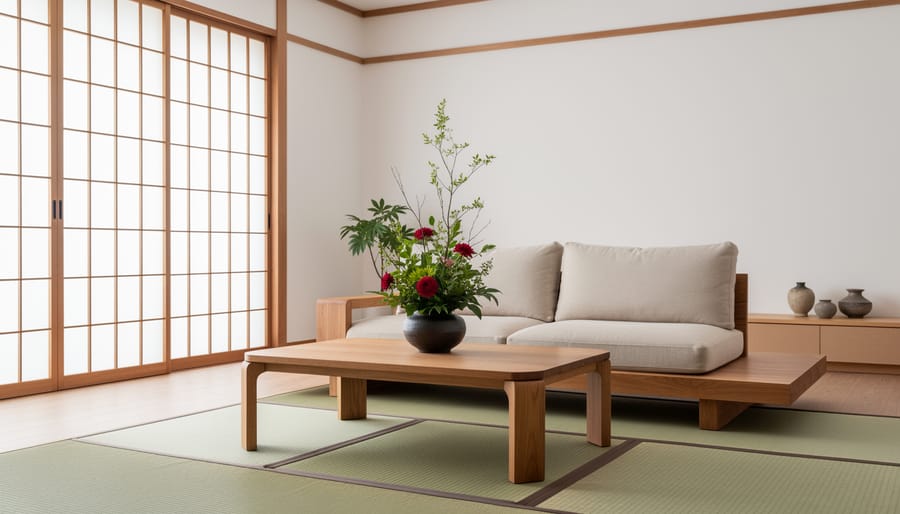
The Japanese living room rejects the traditional sofa-and-coffee-table formula in favor of low seating that fundamentally changes how you experience the space. Floor cushions (zabuton), low benches, and chairs no more than 12 inches high create what designers call a “horizontal emphasis”, your sight lines drop, the ceiling feels higher, and the room immediately expands visually. This isn’t about sitting cross-legged for hours; many people pair floor cushions with a low-backed support or arrange them around a kotatsu-style table where you can still extend your legs comfortably.
Media storage follows the “hidden but accessible” principle. Closed cabinets in natural wood conceal electronics and clutter, while a single open shelf might display one carefully chosen object. The same minimalist approach you’d use to personalize your home office applies here, every visible item should either serve a clear function or bring genuine joy.
Natural light drives the entire layout. Position seating to face windows rather than block them, and replace heavy drapes with sheer linen or rice-paper-style shades that diffuse light without eliminating it. In the evening, swap overhead fixtures for paper lanterns or low table lamps that create pools of warm light at eye level when seated.
One ikebana arrangement in a tokonoma-inspired alcove makes a stronger statement than five scattered potted plants. Choose a single branch with interesting form, place it in a simple ceramic vase, and let negative space do the work.
Bedrooms: The Japanese Approach to Rest
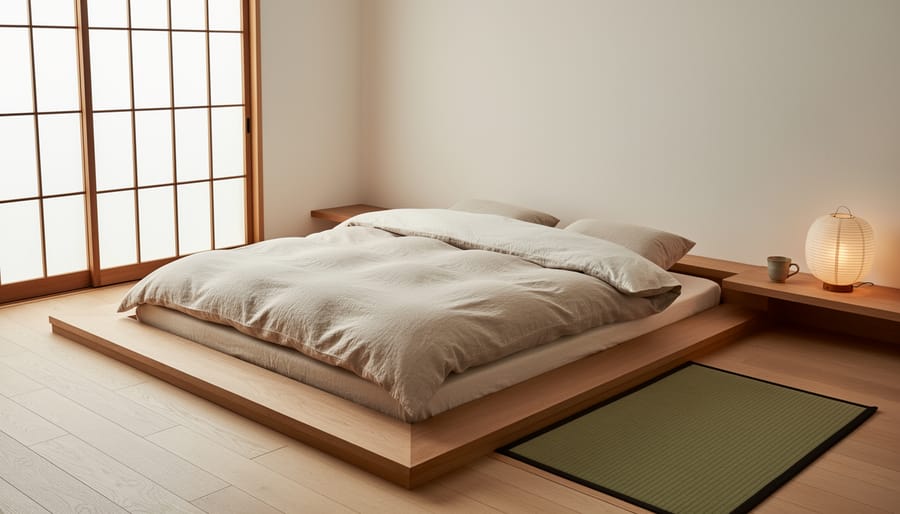
The Japanese bedroom prioritizes rest as a sacred daily ritual rather than an afterthought. Start with a low platform bed or futon-style frame that keeps your sleeping surface close to the ground, creating a grounded, secure feeling while making the room appear more spacious. If a platform bed feels too minimalist, choose one with clean lines in natural wood tones like oak or walnut.
Nightstands should be minimal, think a single small table with just one or two items. A simple ceramic cup for water, perhaps a small plant. That’s it. Japanese design views clutter as mental noise that disrupts sleep, so resist the urge to pile books, electronics, or decorative objects.
Natural bedding makes a tangible difference. Cotton or linen sheets in neutral tones, a simple duvet without elaborate patterns, and perhaps a lightweight wool blanket layered for texture. The goal isn’t stark emptiness but intentional simplicity that lets your mind settle.
Create a pre-sleep sanctuary by removing electronics, keeping window treatments simple (natural fiber shades work beautifully), and ensuring proper ventilation. Japanese homes traditionally emphasize fresh air circulation even in bedrooms. The result is a space that quietly signals to your body: this room exists solely for rest.
Bathrooms: Spa-Like Simplicity
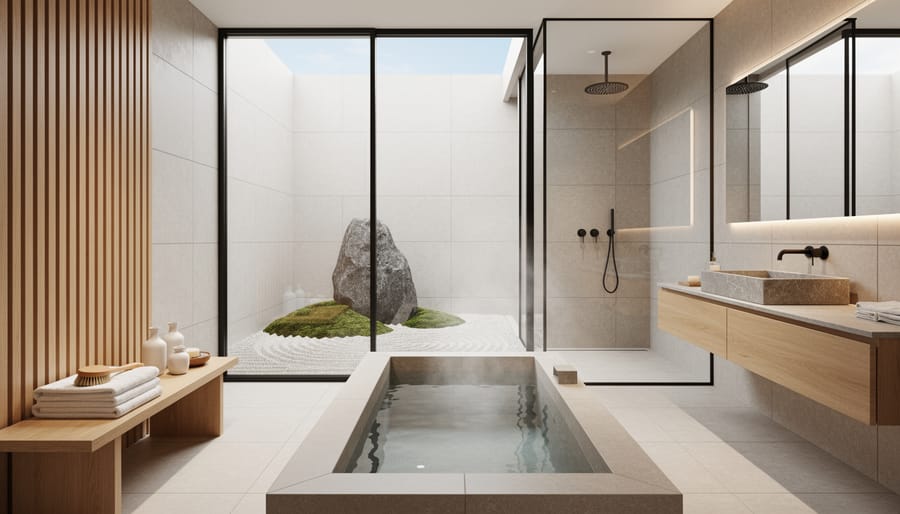
Japanese bathrooms treat bathing as a mindful ritual, not just a quick necessity. The centerpiece is often a deep soaking tub (ofuro), typically made from hinoki cypress or modern materials that mimic its warmth. If a full soaking tub isn’t feasible, you can still capture the essence with wooden bath accessories, a teak bath mat, or a simple cedar stool.
Natural materials dominate: stone tiles in muted grays, wooden accents that age gracefully, and fixtures in matte black or brushed nickel instead of shiny chrome. Keep surfaces clear, store toiletries behind closed doors or in minimal containers. Add a small plant, a folded linen towel, and perhaps a wooden bath tray for the tub.
The goal is creating a space that invites you to slow down, where even a regular shower feels restorative rather than rushed.
Small Spaces and Apartments
Japanese design was refined over centuries in compact urban spaces, making it perfectly suited for small apartments and studios. The principles of ma (negative space) and multi-functionality become practical advantages rather than aesthetic choices when square footage is limited.
Start with furniture that serves multiple purposes. A low dining table doubles as a workspace, while floor cushions stack away when not in use. Built-in storage beneath platform beds eliminates the need for bulky dressers. Sliding shoji-style doors or fabric panels divide areas without sacrificing valuable floor space that hinged doors require.
Vertical space matters in Japanese small-space design. Install floating shelves in natural wood to draw the eye upward while keeping surfaces clear. Use wall-mounted lighting instead of floor lamps. A single statement piece like a tall bamboo plant or vertical scroll painting creates visual interest without clutter.
The Japanese concept of “one in, one out” keeps small spaces functional. Before adding any new decor item, remove something else. This discipline prevents the accumulation that makes compact homes feel cramped. Keep only items that serve a clear purpose or bring genuine joy, displayed with intentional breathing room around them rather than crowded together.
DIY Japanese Decor Projects You Can Start This Weekend
You don’t need to spend hundreds of dollars to bring Japanese design into your home. Some of the most impactful pieces can be created with basic materials and a free afternoon. These projects embrace the wabi-sabi philosophy that celebrates handmade imperfection over factory perfection.
- Simple Shoji-Style Room Divider: Build a wooden frame using 1×2 lumber, then stretch white rice paper or lightweight linen across the panels. Sand the wood lightly and leave it natural or apply one of the best chalk paint ideas in soft white or gray. This creates privacy and diffuses light beautifully without the cost of custom screens.
- Low Platform Display Table: Repurpose an old side table by cutting down the legs to just 6-8 inches high. The low profile instantly shifts the room’s visual weight downward, creating that characteristic Japanese sense of calm. Pair shortened legs with minimalist hairpin legs ideas for a modern twist that maintains the clean aesthetic.
- Ikebana-Inspired Arrangement: You don’t need specialized training to try Japanese flower arranging. Start with a low ceramic bowl, a kenzan (pin frog), and just three stems of different heights. The key is negative space, each element should have room to breathe. Branches, a single bold flower, and something trailing create movement and balance.
- Minimalist Wall Art with Natural Materials: Press leaves, ferns, or grasses between glass panes in simple black frames. Hang them in odd numbers with generous space between each piece. The restraint matters more than the materials themselves.
- Fabric Wall Panel: Stretch natural linen or cotton canvas over a wooden frame to create a soft, textural wall feature. This adds warmth and sound absorption while maintaining the neutral palette central to Japanese interiors.
Each project reinforces core Japanese principles: natural materials, restraint, and the beauty of handmade objects. Start with one that fits your skill level, and you’ll find the process itself becomes a meditation on intentional living.
Where to Find Japanese Decor in 2026
Finding authentic Japanese decor has become easier than ever in 2026, with options ranging from specialty online retailers to immersive pop-up experiences. The key is knowing where to look and what to expect at each price point.
For authentic pieces, Japanese lifestyle retailers like J Life International offer curated collections of traditional items, with prices typically starting around $450 for statement furniture pieces. These sources provide genuine craftsmanship but require a significant investment. If you’re working with a tighter budget, retailers like Muji and Wayfair’s Japanese-inspired collections offer accessible alternatives that capture the aesthetic without the premium price tag.
Pop-up events have emerged as an exciting way to discover Japanese decor while supporting smaller vendors. The Welcome Market in Toronto (938 Queen St W) recently hosted “Next Stop Japan,” a three-day pop-up featuring vendors like The Japanese Paper Place. These events, typically running Friday through Sunday, let you see and touch items before buying, ask questions directly to knowledgeable sellers, and discover unique pieces you won’t find in mainstream stores.
For ongoing shopping, check Instagram and local event listings for similar pop-ups in your area. They’ve become a significant trend, offering everything from handmade washi paper goods to vintage ceramics. Online, Etsy features independent makers creating Japanese-inspired pieces, while specialty stores focusing on Asian home goods often carry authentic items at mid-range prices.
The best approach combines sources: invest in one or two authentic anchor pieces from specialty retailers, fill in with quality inspired items from accessible brands, and hunt pop-ups and vintage shops for unique finds that give your space personality.
Common Mistakes to Avoid When Styling Japanese Decor
The most common mistake newcomers make is treating Japanese decor like a strict rule book rather than a design philosophy. I’ve seen countless homes where people clear out everything, paint all the walls white, and wonder why the space feels cold and uninviting instead of serene. Japanese design isn’t about creating a showroom, it’s about intentional living. The difference matters.
Over-accessorizing defeats the entire purpose. That impulse to fill your newly minimalist coffee table with a dozen small decor accessories 2026 trends might feel safe, but it misses the point of ma, the appreciation of space itself. Choose one beautiful object, give it room to breathe, and resist the urge to add more. Three scattered ikebana arrangements don’t create more calm than one thoughtful display.
Mixing unrelated Asian aesthetics creates cultural confusion, not style. A Chinese zodiac tapestry next to a Buddha statue alongside shoji screens reads as “generic Asian” rather than intentionally Japanese. If you’re incorporating elements from multiple cultures, keep them in separate spaces or choose one aesthetic per room.
Another pitfall is ignoring function for appearance. Japanese design grew from practical living in small spaces, so a beautiful low table that makes your back ache every time you sit down isn’t honoring the aesthetic, it’s misunderstanding it. Adapt the principles to your life. If you need desk height for working, choose a simple wooden desk with clean lines rather than forcing yourself onto floor cushions.
The goal isn’t to create a museum of Japanese style. It’s to bring the principles of simplicity, natural materials, and intentional space into a home that works for how you actually live.
Blending Japanese Decor With Your Existing Style
You don’t need to strip your home bare and start over to embrace Japanese design. The beauty of these principles lies in their adaptability, they work with what you already love, adding intentionality and calm without erasing your personality.
If your home leans modern, Japanese elements slot in naturally. Both aesthetics celebrate clean lines and function. Add a low walnut coffee table to your minimalist living room, swap heavy curtains for rice paper shades, or introduce a single statement piece like a ceramic vase in an earthy glaze. The restraint inherent in Japanese design amplifies modern spaces without making them feel cold.
Scandinavian and Japanese styles are close cousins, sharing a love of natural materials, light, and simplicity. Here, the blend is almost effortless. Layer in bamboo organizers, replace some of your white ceramics with black-glazed pottery, or add a shoji-inspired room divider. Both styles prize hygge and ma, cozy intentionality and breathing room, so they reinforce rather than clash.
Bohemian homes can absolutely accommodate Japanese touches, though it requires restraint. Keep your textiles and plants, but edit the accessories. Swap chaotic shelving for closed minimalist storage, use a low platform as a meditation corner, or display one ikebana arrangement instead of five competing vases. The key is maintaining your warmth while introducing pockets of calm.
Traditional Western interiors benefit from Japanese design as a counterbalance. If your space feels heavy with dark wood furniture and pattern, introduce negative space through decluttering, add natural linen textiles, or place a simple bamboo screen to break up visual weight. You’re not abandoning elegance, you’re creating moments where the eye can rest.
Start with one room or even one corner. Japanese design principles enhance what you have by teaching you when to stop adding.
Japanese decor isn’t about achieving magazine-perfect minimalism or importing an entire aesthetic overnight. It’s about choosing pieces and principles that bring you calm, function, and a little more breathing room in your everyday life. The beauty of this approach is that it meets you where you are, whether that’s swapping one cluttered surface for a single meaningful object or rethinking an entire room around natural materials and low furniture.
Start with one change that resonates. Maybe it’s clearing your nightstand to just a lamp and a book, adding a bamboo tray to organize your bathroom countertop, or simply opening your curtains wider to let natural light shape your space. Japanese design rewards small, intentional steps more than grand overhauls.
Remember that wabi-sabi embraces imperfection. Your home doesn’t need to look like a temple or a showroom. A slightly worn wooden bowl, mismatched linen cushions, or a single branch in a simple vase can embody these principles just as authentically as expensive furniture. The goal is creating a space that feels like yours, where you can think clearly and rest deeply.
As you explore this aesthetic in 2026, you’ll find more resources than ever, from accessible DIY projects to specialty retailers offering authentic pieces at various price points. Take your time. Let each addition settle into your routines before adding the next. That’s the real spirit of Japanese home decor, not perfection, but presence.
