

Your home speaks volumes about who you are, and in 2026, contemporary accessories offer the fastest way to transform any space from ordinary to exceptional. Walk into a room styled with sleek ceramic vases, geometric wall art, and brushed metal accents, and you’ll immediately sense the difference. These pieces don’t just fill empty surfaces. They create focal points, establish mood, and demonstrate your design sensibility without the commitment of major renovations.
Contemporary decor sits at the sweet spot between minimalist restraint and maximalist expression. Think clean lines paired with unexpected textures, neutral foundations punctuated by strategic pops of color, and natural materials meeting industrial finishes. The beauty lies in its flexibility. You can layer a chunky knit throw over a leather sofa, position sculptural candlesticks on a reclaimed wood console, or arrange oversized abstract prints above mid-century furniture. Each combination works because contemporary style embraces intentional contrast.
The market reflects this growing appetite for well-designed accessories. Homeowners are investing in pieces that deliver visual impact without overwhelming their budgets or square footage. A carefully chosen mirror can double a room’s perceived size. The right lighting fixture becomes conversation-worthy art. Even small updates like switching hardware finishes or adding textured pillows create surprisingly dramatic shifts.
What makes contemporary accessories particularly accessible is their range. Whether you’re furnishing your first apartment or refreshing a long-established home, options exist at every price point. High-end designer pieces coexist with affordable alternatives that capture the same aesthetic principles. DIY enthusiasts can recreate trending looks using materials from craft stores and home centers. The key isn’t spending more but choosing smarter, selecting pieces that reflect current design thinking while maintaining personal authenticity.
This guide breaks down exactly what qualifies as contemporary, which accessories deliver maximum impact in each room, and how to build a cohesive look that feels both current and timeless.
What Makes Home Decor Accessories ‘Contemporary’ in 2026
Contemporary accessories exist at the intersection of timeless design principles and evolving lifestyles. Unlike the historical references frozen in modern mid-century pieces or the stark restraint of minimalism, contemporary style reflects what feels current right now in 2026, which means it evolves as we do.
The confusion between these terms trips up even experienced decorators. Here’s how they actually differ:
- Contemporary
- Design that reflects current trends and the present moment, characterized by flexibility and ongoing evolution. A contemporary accessory in 2026 might incorporate sustainable materials and curved silhouettes that weren’t prominent in 2020.
- Modern
- Refers specifically to the mid-century modern movement (roughly 1933-1965) with defined characteristics like Eames chairs and starburst clocks. Modern pieces are historical artifacts of a specific era, not reflections of today.
- Minimalist
- A philosophy of radical reduction where less is always more. Every item must justify its existence, resulting in sparse, often monochromatic spaces with very few accessories.
- Transitional
- A deliberate blend of traditional and contemporary elements, think classic furniture shapes upholstered in modern fabrics. This middle-ground approach appeals to those wanting familiarity with freshness.
Contemporary accessories in 2026 share several defining characteristics that distinguish them in practice. Clean lines dominate, but not the rigid geometry of minimalism; instead, expect organic curves and asymmetrical balance that feel intentional yet relaxed. Neutral palettes provide the foundation, warm whites, varied grays, natural beiges, but contemporary style welcomes bold accent colors as focal points rather than timid touches.
Material choices reveal contemporary priorities. Organic materials like light woods, linen, wool, and stone ground spaces in tactile reality, countering our increasingly digital lives. Sustainability isn’t an add-on; it’s baked into material selection, with recycled glass, reclaimed wood, and responsibly sourced textiles gaining prominence as the home decor market expands toward its projected $862.18 billion value in 2026.
The most crucial distinction: contemporary accessories embrace functional beauty. A sculptural vase must actually hold flowers. A decorative bowl should organize keys or jewelry. This practicality separates contemporary pieces from purely ornamental accessories that gather dust. Every item you bring into a contemporary space should either serve a purpose, create visual interest, or ideally both.
Essential Contemporary Accessories by Room
Living Room Statement Pieces
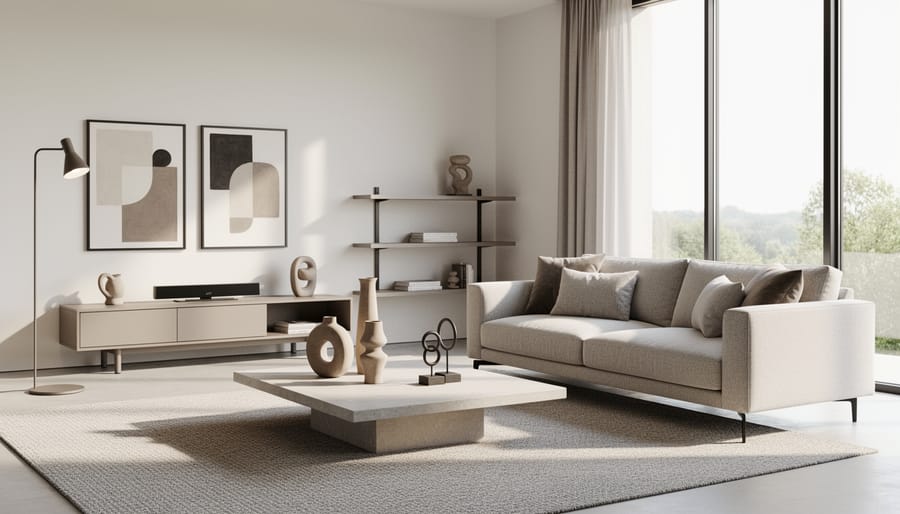
Living rooms anchor your contemporary design journey because they showcase your aesthetic choices to guests and family alike. Start with throw pillows in textured fabrics like linen or boucle, selecting geometric patterns or solid neutrals with one bold accent color that ties the room together. Layer three to five pillows across your sofa, varying sizes from 18 to 22 inches for visual interest without overwhelming the space.
Sculptural vases deserve prominent placement on coffee tables or floating shelves. Choose pieces in organic shapes with matte finishes, think curved ceramic forms in cream, terracotta, or charcoal. A single statement vase works better than a cluster; pair it with dried pampas grass or leave it empty as pure sculpture. These pieces bridge function and art, embodying contemporary design’s practical beauty principle.
Geometric wall art transforms blank walls into focal points. Select large-scale abstract prints with clean lines and a limited color palette that echoes your room’s scheme. Frame them in slim black or natural wood frames, and hang them at eye level, roughly 57 to 60 inches from the floor to center. Oversized single pieces create more impact than gallery walls in contemporary spaces.
Coffee table books serve as both conversation starters and styling tools. Stack two to four volumes on architecture, photography, or design, arranging them with spines facing outward and varying the stack heights.
Modern lighting fixtures complete the transformation. Floor lamps with arched arms or tripod bases provide task lighting while making sculptural statements. Consider a DIY abstract art project: stretch a canvas, tape off geometric sections with painter’s tape, and apply acrylic paints in your room’s palette. Remove the tape while paint is slightly wet for crisp lines that rival gallery pieces.
Bedroom Sanctuary Accents
Your bedroom’s transformation begins with accessories that balance serenity and style. Contemporary bedroom accents prioritize tactile comfort and visual calm, creating a personal retreat from daily demands.
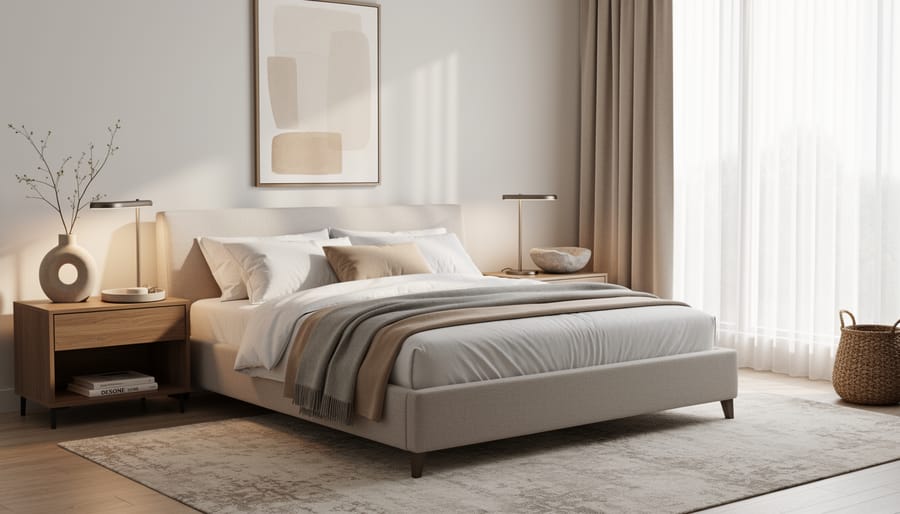
Start with textured throws in chunky knits, waffle weaves, or linen blends draped across your bed’s foot or folded on a reading chair. Choose neutral tones, oatmeal, charcoal, warm white, to maintain the contemporary emphasis on restraint while adding essential warmth. These layers provide both function and softness without overwhelming the space.
Platform-style decorative trays anchored on dressers or nightstands corral daily essentials with purpose. Look for trays in natural wood, matte ceramic, or brushed metal that echo your room’s material palette. Use them to hold jewelry, watches, or a small succulent arrangement, transforming scattered items into curated displays.
Contemporary mirrors serve double duty: they amplify light and act as sculptural statements. Frameless designs, thin metal frames, or asymmetric shapes work best. Position a full-length mirror against a wall rather than hanging it for that relaxed, modern sensibility.
Nightstand accessories demand restraint. A single sculptural lamp, one small vessel for reading glasses, and perhaps a small stack of two books create sufficient visual interest. Swap ornate frames and clutter for breathing room.
Finish with organic cotton bedding touches, a textured Euro sham, linen pillowcases, or a lightweight cotton blanket in solid colors. These natural fibers align with contemporary values of sustainability and comfort, proving that bedroom sanctuaries need fewer pieces done exceptionally well.
Kitchen and Dining Upgrades
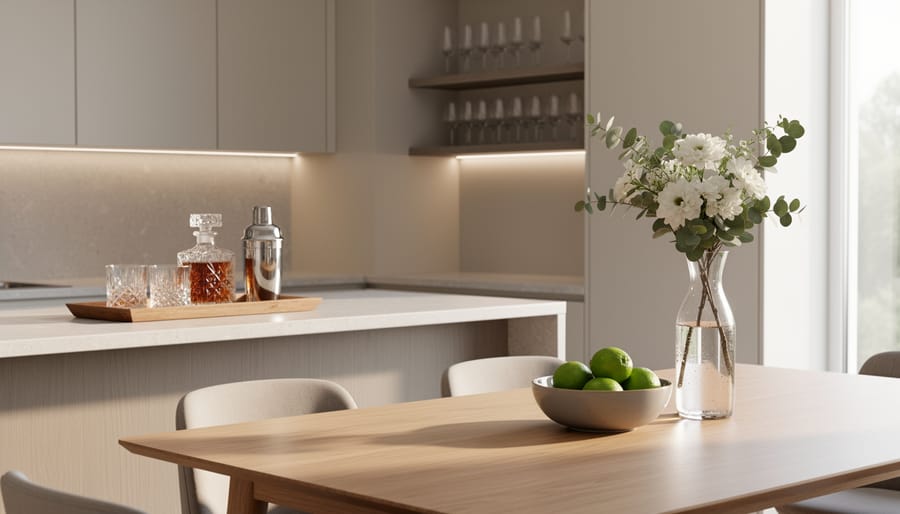
Kitchen and dining spaces deserve accessories that blend utility with contemporary aesthetics. Start with a sculptural fruit bowl, look for organic shapes in matte black metal or natural wood with clean geometric bases. These serve as centerpieces that elevate ordinary produce into a still-life display worthy of an Architectural Digest spread.
Utensil holders should ditch traditional ceramic crocks for sleek stainless steel cylinders or marble containers with brass accents. The best ones compartmentalize tools without visible clutter, maintaining the streamlined look contemporary kitchens demand.
Geometric placemats and table runners anchor your dining aesthetic. Choose leather-look vinyl hexagons, woven grass rectangles, or linen with subtle abstract borders. They protect surfaces while creating visual rhythm across the table. Pair with minimalist napkin rings in brushed gold or matte black to complete the setting.
Bar accessories matter even if you rarely entertain. A contemporary bar cart styled with a sleek ice bucket, angular cocktail shaker, and geometric coasters transforms a corner into a design moment. Select pieces in matching metal finishes, copper warming against white cabinetry, or matte black for drama.
Open shelving demands careful curation. Stack three neutral ceramic bowls by size, lean a textured cutting board against the wall, and position a single statement piece like a hand-thrown vase. Leave breathing room between items. The trick designers use: group objects in odd numbers and vary heights to create visual interest without chaos. Remove anything chipped, mismatched, or purely sentimental, contemporary open shelving tells an edited story.
Bathroom Finishing Touches
Bathrooms often get overlooked in decor planning, yet a few well-chosen contemporary accessories can transform the space into a calming, spa-like retreat. Start with the basics: swap plastic soap dispensers for sleek ceramic or frosted glass versions in matte black, brushed nickel, or white. These small upgrades instantly modernize your vanity without renovation costs.
Storage matters in contemporary bathrooms. Choose minimalist containers with clean lines, think cylindrical bamboo canisters for cotton swabs or rectangular ceramic trays for everyday items. Open shelving works beautifully with matching sets, while under-sink areas benefit from transparent acrylic organizers that maintain visual lightness.
Textiles deserve attention too. Organic cotton towels in neutral tones (white, gray, sand) draped on a modern ladder rack or geometric towel bar create that hotel-bathroom feel. Skip busy patterns; solid colors or subtle waffle-weave textures align better with contemporary aesthetics.
A geometric mirror serves double duty as functional necessity and focal point. Round mirrors with brass frames, asymmetric shapes, or frameless options with beveled edges all work. Position yours to reflect natural light.
Finally, bring in spa touches: a wooden bath caddy, river stone soap dish, or eucalyptus bundle hanging from your showerhead. These organic elements soften hard surfaces while maintaining the clean, uncluttered vibe contemporary bathrooms demand.
Entryway First Impressions
Your entryway sets the tone before guests step inside. A wall-mounted key holder in brushed brass or matte black keeps essentials organized while adding architectural interest, look for geometric designs or linear arrangements that echo contemporary clean lines. Sculptural umbrella stands in natural wood or metal become functional art pieces rather than afterthoughts. Replace bulky coat racks with minimalist wall hooks spaced intentionally, treating them as design elements. Style your console table sparingly: a single statement vase, a shallow bowl for mail, and perhaps one art book. The trick is purposeful curation, each piece earns its place through both beauty and utility, creating a welcoming yet uncluttered first impression that immediately signals your design sensibility.
Material Trends Defining Contemporary Accessories in 2026
Contemporary accessories draw their visual power from materials that balance natural warmth with industrial refinement. The most sought-after pieces in 2026 blend sustainable wood, brushed metals, natural stone, organic textiles, recycled glass, and concrete, each material selected not just for aesthetics but for its alignment with contemporary design’s core principles of authenticity, functionality, and environmental consciousness.
Sustainable wood remains foundational in contemporary spaces, whether it’s light oak for Scandinavian-influenced pieces or darker walnut for adding depth. These natural materials bring texture and warmth that prevent contemporary rooms from feeling cold or sterile. You’ll see wood in sculptural bowls, minimalist shelving, and picture frames with clean, unadorned edges. The grain patterns provide organic visual interest without competing with other design elements.
Brushed metals have overtaken polished finishes as the contemporary standard. Matte black fixtures and hardware create dramatic contrast in neutral spaces, while brushed brass and copper add sophisticated warmth without the traditional shine. These finishes work across accessories from lighting fixtures to hairpin legs ideas for furniture to decorative trays and candle holders. The subdued luster catches light subtly, maintaining the understated elegance contemporary style demands.
| Material | Aesthetic Impact | Price Point | Best Use Cases |
|---|---|---|---|
| Sustainable Wood | Warmth, organic texture | Mid to high | Bowls, frames, shelving |
| Brushed Metals | Refined, modern contrast | Mid | Lighting, hardware, trays |
| Natural Stone | Luxury, grounding weight | High | Bookends, coasters, countertop pieces |
| Recycled Glass | Transparency, eco-conscious | Low to mid | Vases, storage containers |
Natural stone accessories, marble, granite, slate, anchor contemporary spaces with literal and visual weight. Stone coasters, bookends, and serving boards communicate permanence and luxury while their neutral tones support rather than dominate color schemes.
Organic textiles like linen, cotton, and wool appear in contemporary throws, pillows, and area rugs. These materials soften hard surfaces and metallic finishes while maintaining the clean aesthetic through solid colors or subtle geometric weaves. They also satisfy the contemporary emphasis on tactile experience and natural materials over synthetics.
Recycled glass has emerged as the conscience-friendly choice for vases, storage containers, and decorative objects. Its slight imperfections and variations actually enhance contemporary appeal by adding character without fussiness. Similarly, concrete accessories, from planters you might create through DIY headboard crafts to industrial-style desk organizers for home office decor bring raw, architectural texture that complements rather than clashes with refined finishes.
These materials work together because they share honesty: each looks and feels like what it is, without pretense or excessive ornamentation. That authenticity is what makes contemporary accessories feel current rather than dated.
Color Palettes and Patterns for Contemporary Accessories
Contemporary color palettes start with a neutral foundation that creates breathing room for bolder choices. Whites, grays, and warm beiges form the base, think a soft linen throw pillow in greige or a matte white ceramic vase. These shades work because they don’t compete; they anchor your space and let other elements shine. Layer different tones within your neutral family: pair cool concrete gray with warmer putty tones, or mix crisp white with cream for depth without visual clutter.
Strategic accent colors inject personality without overwhelming the contemporary aesthetic. Choose one or two bold hues and repeat them sparingly across three or four accessories in a room. A terracotta throw pillow might echo a rust-colored bowl on your coffee table and a similar-toned art print. Deep navy, sage green, burnt orange, and charcoal work particularly well as contemporary accents. Design publications like Architectural Digest frequently showcase this restrained approach, you’ll notice rooms where a single jewel tone appears in a rug, a cushion, and a small sculpture, creating intentional visual connections.
Monochromatic layering adds sophistication. Select accessories in varying shades of one color: midnight blue, slate blue, and powder blue storage boxes grouped together, or sand, camel, and chocolate brown textiles on a neutral sofa. This technique creates dimension while maintaining the clean visual lines contemporary style demands.
Geometric and abstract patterns belong in contemporary spaces, but keep them controlled. Choose patterns with clean edges rather than organic, flowing designs. Hexagonal trays, striped runners with sharp lines, and abstract art featuring blocks of color all fit. Mix one or two patterned pieces with solid accessories to avoid visual chaos. Elle Decor often features rooms where a single bold geometric rug or one piece of abstract-patterned wall art becomes the focal point, with everything else kept intentionally simple.
The trick is editing ruthlessly. If a color or pattern doesn’t serve a clear purpose or create that intentional repetition, leave it out.
DIY Contemporary Decor Accessories You Can Make This Weekend
You don’t need professional design skills or a hefty budget to bring contemporary style into your home. These three weekend projects transform basic materials into sophisticated accessories that rival store-bought pieces. Each takes under four hours and requires no specialized tools.
**Minimalist Concrete Planters**
Concrete planters deliver that industrial-contemporary edge without the designer price tag. You’ll need concrete mix (about $15 for enough to make three planters), plastic containers in two sizes for molds, cooking spray, and sandpaper.
- Spray the inside of your larger container and outside of the smaller one with cooking spray.
- Mix concrete according to package directions until it reaches a thick pudding consistency.
- Pour two inches of concrete into the larger container, then center the smaller container inside, weighing it down with rocks.
- Let cure for 24 hours, then carefully remove both molds.
- Sand any rough edges and seal with concrete sealer if desired.
The result is a raw, textured planter perfect for succulents or herbs. Make a cluster of three in varying heights for maximum contemporary impact.
**Abstract Geometric Wall Art**
Canvas panels (three 12×16-inch pieces run about $20), painter’s tape, and acrylic paints in your chosen palette create gallery-worthy wall art. Map out your geometric design with tape, working with triangles, hexagons, or overlapping rectangles. Paint each section, letting layers dry between colors. Remove the tape while the final coat is slightly wet for crisp lines. This technique works beautifully with monochromatic grays and whites or bold jewel tones against neutral backgrounds. If you’re comfortable with more color experimentation, browse chalk paint ideas for matte, velvety finishes that add depth to geometric designs.
**Modern Macramé Wall Hanging**
Traditional macramé gets a contemporary update when you use thick cotton rope (around $25 for 100 feet), stick to simple knots, and incorporate geometric shapes rather than fringe-heavy designs. Mount a wooden dowel, cut six strands of rope at equal lengths, and focus on square knots arranged in diamond or triangular patterns. Keep the bottom edge clean and blunt rather than allowing long tassels. The key is restraint: contemporary macramé uses negative space as part of the design, creating an airy, architectural feel rather than the dense, bohemian look of traditional pieces.
All three projects cost under $75 total and give you the satisfaction of creating truly custom pieces that reflect your personal interpretation of contemporary style.

Where to Source Contemporary Accessories at Every Price Point
Contemporary accessories span a remarkably wide price spectrum, and the good news is that every tier offers genuinely stylish options. Understanding where to shop for different quality levels lets you build a curated look without emptying your savings account.
High-end designer pieces from showrooms and specialty boutiques deliver exceptional craftsmanship and exclusive designs. These investment accessories work best as focal points: a sculptural ceramic vase from a recognized artist, a limited-edition wall sculpture, or handcrafted brass lighting. You’ll find these through design-focused retailers, artisan galleries, and directly from makers’ studios. Buy one statement piece per room rather than filling every surface.
Mid-range retailers bridge quality and accessibility beautifully. Look to home goods chains with dedicated contemporary collections, online design marketplaces, and curated lifestyle stores. These sources offer well-made accessories that nail the contemporary aesthetic without requiring months of saving. Their throw pillows, wall art, and decorative objects typically use quality materials and on-trend finishes at reasonable prices.
Affordable options from mass retailers and online marketplaces prove that budget constraints don’t mean compromising style. Many mainstream stores now stock contemporary accessories designed by respected creatives. Focus on simpler pieces like geometric planters, minimalist picture frames, and neutral textiles where construction matters less than form.
Secondhand and vintage sources provide unexpected treasures for contemporary spaces. Mid-century modern pieces from estate sales naturally complement contemporary style, while thrift stores occasionally yield perfectly minimalist ceramics and glassware. Online resale platforms let you search specifically for contemporary brands at fractions of original costs.
The secret to mixing price points effectively is strategic placement. Position your investment piece where it commands attention, then layer affordable accessories around it. Match finishes across price ranges so everything feels intentional. A brushed brass bowl from a discount store looks cohesive beside an expensive brass lamp when the tones align. Quality over quantity always wins in contemporary design.
Common Mistakes When Choosing Contemporary Accessories
Even with a clear vision for contemporary style, it’s surprisingly easy to make missteps that undermine your design goals. Recognizing these common pitfalls before you shop can save you money and create a more cohesive space.
The first trap is over-accessorizing. Contemporary design thrives on restraint and breathing room, yet many homeowners crowd surfaces with too many pieces. Instead of three sculptural vases on your console table, try one statement piece flanked by empty space. Think of negative space as an accessory itself, it allows each item to shine and prevents visual chaos.
Scale and proportion mistakes rank second. A tiny ceramic bowl on an expansive dining table looks lost, while an oversized wall mirror in a small entryway overwhelms the space. Before purchasing any accessory, measure your surface or wall area and visualize the piece in context. A good rule: accessories should fill one-third to one-half of the available space, leaving room for balance.
The tension between trendy and timeless poses another challenge. While contemporary style evolves, chasing every micro-trend leads to dated-looking spaces within months.
- Remain visually appealing for years, protecting your investment.
- Easier to mix with various decor updates without replacement.
- Build a cohesive collection that grows naturally over time.
- Quickly appear outdated as design trends shift rapidly.
- Require frequent replacement, increasing long-term costs.
- Create disjointed aesthetics when mixed with classic items.
When you choose long-lasting pieces with classic contemporary lines, like a brushed brass picture frame or a simple ceramic planter, you build a foundation that accepts trend-driven accent colors through smaller, easily swapped items like throw pillows.
Texture variety often gets overlooked in favor of color coordination. A room filled with smooth, glossy surfaces feels cold and sterile, even if the color palette is perfect. Layer different textures: pair a rough concrete vase with soft linen curtains, or combine woven baskets with sleek metal candleholders. This tactile diversity creates depth and warmth while maintaining contemporary aesthetics.
Finally, neglecting functional needs sabotages even beautiful accessory choices. That sculptural bowl may be stunning, but if you actually need a fruit bowl that holds produce without bruising, pure form without function fails. Contemporary design celebrates the marriage of beauty and utility, so select accessories that genuinely serve your lifestyle while looking great.
The contemporary accessories market isn’t just growing, it’s exploding, with projections reaching $1,299.88 billion by 2034. You’re not simply decorating when you bring these pieces into your home; you’re joining a global movement that values thoughtful design, sustainability, and personal expression.
Start small if the prospect feels overwhelming. Choose one room where you spend the most time and introduce two or three contemporary pieces that genuinely resonate with you. A sculptural vase for your living room coffee table. Geometric throw pillows for your bedroom. A minimalist fruit bowl that makes your kitchen counter feel intentional rather than cluttered.
Mix approaches without hesitation. That DIY concrete planter you craft this weekend can sit beautifully beside a carefully chosen designer piece. Contemporary style rewards this blend of resourcefulness and investment, creating spaces that feel both curated and authentic.
Remember that contemporary doesn’t demand perfection or a complete overhaul. It invites you to layer in clean lines, organic materials, and functional beauty at your own pace. Your interpretation matters more than strict adherence to any rulebook.
The accessories you choose today become the foundation for how your home evolves tomorrow. They’re the affordable, achievable entry point into creating spaces that reflect where design is heading while honoring where you actually live.
