

Traditional home decor is a time-honored design approach centered on symmetry, rich wood tones, classic furniture silhouettes, and layered textiles that create rooms with warmth and permanence. It draws from 18th and 19th-century European and American design traditions, favoring pieces like wingback chairs, turned-leg tables, and upholstered sofas in structured fabrics such as damask, toile, and velvet. What sets traditional style apart is its emphasis on craftsmanship and heirloom quality rather than fleeting trends.
The style is seeing renewed interest in 2026 as homeowners push back against minimalism’s stark surfaces and seek spaces that feel lived-in and personal. Younger buyers inheriting family furniture are discovering these pieces fit naturally into a traditional framework, while others appreciate the style’s ability to accommodate collections, artwork, and meaningful objects without looking cluttered.
Executing traditional decor authentically means understanding its foundational elements: a balanced color palette anchored by neutrals with jewel-tone accents, wood furniture with visible grain and detail, and layered window treatments that provide both privacy and visual weight. The goal is refinement without stuffiness, which requires editing. A room can honor tradition through a few well-chosen antiques or quality reproductions rather than filling every surface.
This guide walks through the furniture categories worth investing in, the color schemes and materials that define the look, and practical DIY approaches for adding traditional character on any budget. You’ll also learn which common missteps dilute the style’s impact and how to avoid them.
What Defines Traditional Home Decor in 2026
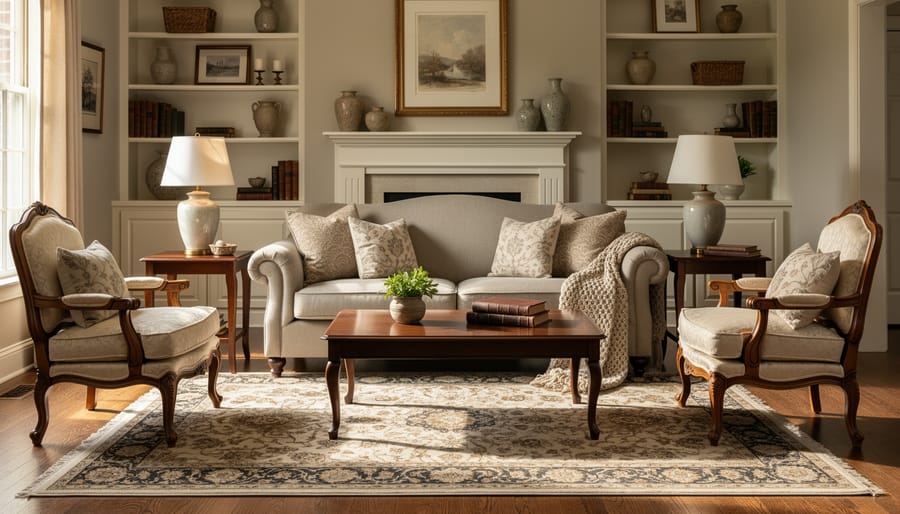
Traditional home decor in 2026 isn’t a stuffy museum aesthetic frozen in time, it’s a design language built on proportion, quality materials, and details that have proven their staying power across generations. If you’re trying to pin down what makes a room feel traditionally styled versus contemporary or transitional, focus on a few defining characteristics that work together to create that classic, grounded look.
At its core, traditional design values balance and formality. Furniture arrangements typically mirror each other across a room’s central axis, matching table lamps flanking a sofa, identical armchairs facing a fireplace, centered artwork above a mantel. This symmetry creates visual calm and a sense of order that contemporary spaces, with their asymmetrical layouts and unexpected placements, deliberately avoid.
The material palette leans heavily on rich, warm wood species finished to show off natural grain. Cherry, mahogany, walnut, and oak appear in medium to dark stains, often with a slight sheen that highlights craftsmanship. Compare that to contemporary interiors, where you’ll see lighter woods, painted finishes, or materials like glass and metal taking center stage.
- Symmetrical arrangements
- Furniture and accessories placed in balanced pairs across a room’s center line, creating visual harmony and formality.
- Carved wood details
- Hand-carved or molded embellishments on furniture legs, chair backs, and case pieces that showcase traditional craftsmanship.
- Layered textiles
- Multiple fabric patterns and textures, damask, toile, velvet, brocade, combined in upholstery, drapery, and pillows for depth and warmth.
- Classic furniture silhouettes
- Recognizable forms like wingback chairs, camelback sofas, cabriole legs, and turned spindles rooted in historical furniture styles.
- Antique-inspired hardware
- Brass pulls, bronze knobs, and patinated metal finishes that reference historical periods rather than sleek modern designs.
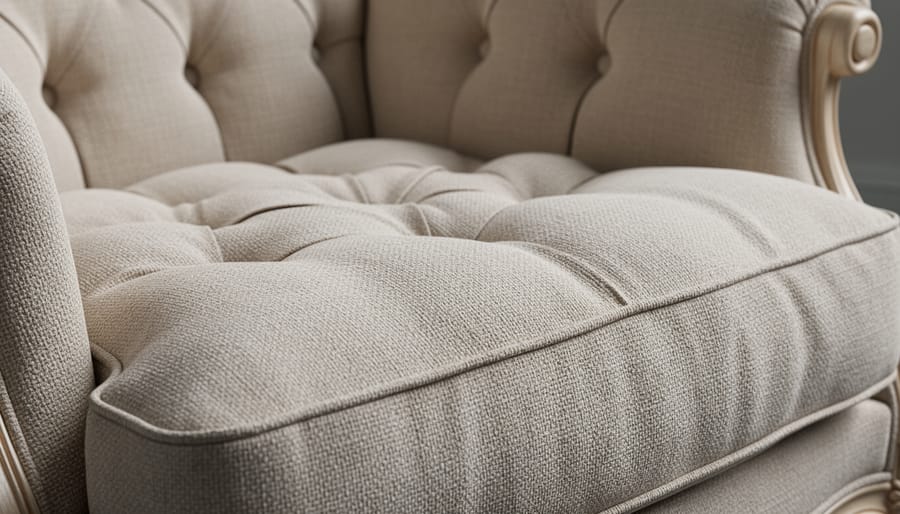
Traditional furniture silhouettes are instantly recognizable, wingback chairs, camelback sofas, cabriole legs, ball-and-claw feet. These forms reference specific historical periods (Queen Anne, Chippendale, Federal) and carry ornamental details like turned spindles, fluted columns, or decorative molding. Upholstery typically features button tufting, nailhead trim, and welted seams, finished in damask, velvet, or linen rather than the smooth, minimalist fabrics you’d find on a contemporary sectional.
Pattern layering is another hallmark. Traditional rooms confidently mix florals, damasks, plaids, and stripes across different surfaces, a skill that distinguishes them from transitional spaces, which tend toward solid neutrals with subtle texture. You’ll also see antique-inspired accessories like framed botanicals, porcelain lamps, and decorative molding rather than the abstract art and sculptural objects that define modern interiors.
Transitional style splits the difference, borrowing traditional’s warmth and wood tones but simplifying the ornamentation and mixing in cleaner lines. If a room feels too pared-down and angular, it’s likely contemporary; too busy with pattern and carving, fully traditional. The sweet spot for traditional design in 2026 is knowing these principles well enough to apply them with intention, not just filling a room with heavy furniture and calling it classic.
Why Homeowners Are Returning to Classic Interiors
The shift back to traditional interiors reflects something deeper than a simple design cycle. After years of minimalism and rapid trend chasing, homeowners are craving spaces that feel rooted and enduring. This return to classic style represents a conscious rejection of disposability in favor of environments built to last.
Part of the appeal is emotional. Traditional decor evokes a sense of comfort and continuity that many find grounding. These interiors remind us of grandparents’ homes, historic estates, and spaces that weren’t redesigned every few years. There’s reassurance in symmetry, rich wood tones, and furnishings that look like they’ve been passed down rather than ordered overnight. In uncertain times, people gravitate toward what feels permanent and familiar.
The backlash against fast design trends has also played a role. Just as fast fashion lost its luster, homeowners grew tired of chasing fleeting aesthetics that felt dated within months. Traditional style sidesteps this exhaustion entirely. A well-made wingback chair or a solid mahogany dining table doesn’t suddenly look irrelevant when Instagram pivots to the next microtrend. Investing in long-lasting furniture with classic lines means building a home that won’t require constant reinvention.
Quality craftsmanship matters again, too. Traditional furniture often showcases joinery, hand-carved details, and construction methods that stand the test of time. Homeowners are recognizing that pieces built with care and skill hold their value, both aesthetically and functionally. It’s a shift from viewing furniture as temporary decor to seeing it as meaningful investment.
This movement isn’t about recreating museum rooms. It’s about blending timeless elements with personal touches to create homes that feel both elegant and livable, spaces designed for years rather than seasons.
The Building Blocks: Essential Furniture Pieces for Traditional Rooms
Upholstered Seating That Anchors Your Space
Traditional upholstered seating forms the foundation of any classic room, and choosing pieces with authentic profiles makes all the difference. Look for sofas and chairs with distinctive traditional silhouettes that have stood the test of time.
The Chesterfield sofa remains the gold standard, its deep button tufting, rolled arms, and low back create an unmistakable presence. Wingback chairs offer both visual drama and practical comfort, with their high sides originally designed to block drafts. Camelback sofas bring graceful curves through their arched top rail, softening formal spaces without sacrificing sophistication.
Fabric selection carries equal weight to frame design. Velvet delivers instant luxury and works beautifully on tufted pieces, catching light to highlight carved details. Damask patterns add traditional motifs through woven texture rather than printed designs. Linen offers a more relaxed take on classic style, aging beautifully while maintaining that lived-in elegance traditional rooms need.
Construction quality separates heirloom pieces from disposable furniture. Examine frame joinery, corner blocks and doweled joints outlast stapled frames. Eight-way hand-tied springs provide superior support and longevity compared to sinuous springs. Hardwood frames in maple or oak won’t warp or crack over decades of use.
Don’t overlook details like turned or tapered legs, nailhead trim along seams, and self-welted cushions. These finishing touches signal authentic traditional craftsmanship and elevate the entire piece beyond basic upholstered furniture into true anchors for your space.
Wood Furniture with Heritage Appeal
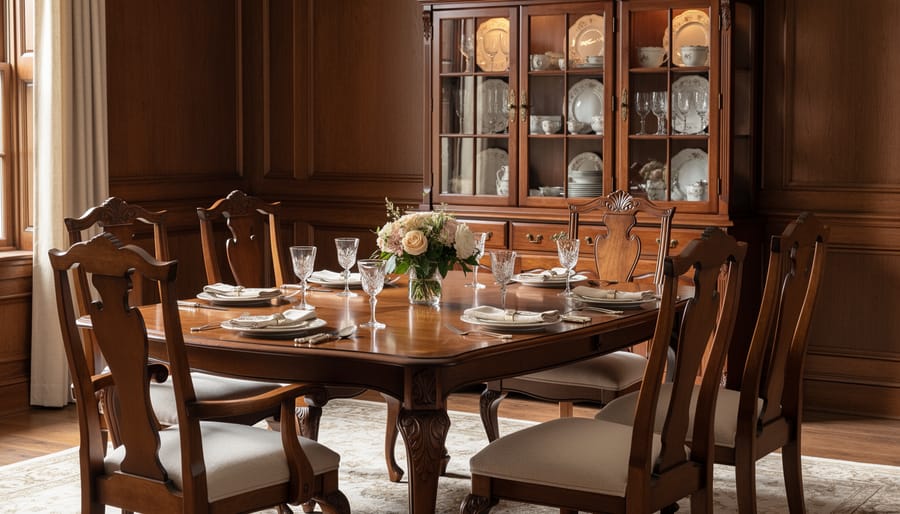
Wood furniture forms the backbone of traditional interiors, carrying the weight of heritage through carefully selected pieces in cherry, mahogany, and walnut. A dining table in rich cherry or mahogany becomes more than a gathering spot, it anchors the room with its substantial presence and warm grain patterns. Look for tables with turned or fluted legs rather than straight, modern silhouettes. The wood should feel dense and solid, not hollow or lightweight.
Sideboards and credenzas in traditional spaces serve dual purposes: storage and display. Seek out pieces with dovetail drawer construction, which signals quality joinery that will last decades. The drawer fronts should close smoothly without gaps, and interior compartments often feature dust panels between drawers, a hallmark of thoughtful craftsmanship. Hardware matters tremendously here. Brass or bronze pulls with an aged patina feel more authentic than shiny chrome or brushed nickel.
Bookcases in walnut or mahogany bring vertical interest while housing collections that personalize a space. Traditional bookcases often feature adjustable shelving, crown molding at the top, and a substantial base. Console tables placed behind sofas or in entryways work best when they echo other wood tones in the room without matching them exactly, variation in finish depth adds visual richness.
Patina tells a story. Don’t shy away from pieces with slight wear marks or darkened edges where hands have touched them over time. That lived-in quality separates genuine traditional style from showroom staging.
Color Palettes and Materials That Feel Timeless
Traditional color palettes center on depth and warmth rather than stark contrast. Think jewel tones like emerald green, sapphire blue, burgundy, and deep gold paired with neutrals that lean warm, cream, taupe, greige, and soft ivory. These colors create rooms that feel grounded and inviting, not cold or sterile. Layering is key: a sage green wall might anchor a room with cream trim, burgundy upholstery, and gold accents in throw pillows or artwork. The palette should feel collected over time, not matched from a single catalog page.
Wood finishes bring another layer of warmth and authenticity. Traditional interiors embrace the natural variation in wood, cherry, mahogany, walnut, and oak, often mixing different tones within a single room. A mahogany dining table can sit beautifully alongside a walnut bookcase if the undertones harmonize. Avoid overly uniform wood finishes; the patina and grain differences add character. Look for finishes that show the wood’s natural beauty rather than heavy stains that obscure it.
Natural materials ground traditional spaces in quality and permanence. Stone countertops in marble or soapstone, hardwood floors in wide planks, wool or silk rugs, and linen or velvet upholstery all contribute to the tactile richness that defines the style. Hardware matters too, brass and bronze pulls, hinges, and light fixtures develop a warm patina over time that reinforces the sense of heritage. Oil-rubbed bronze and antique brass finishes work better than shiny chrome or brushed nickel, which skew modern.
When selecting materials, prioritize those that age gracefully. Leather deepens in color, brass develops character, wood gains patina. These changes enhance traditional interiors rather than diminish them, rewarding patience and careful selection with spaces that grow more beautiful over the years.
Layering Textiles and Patterns the Traditional Way
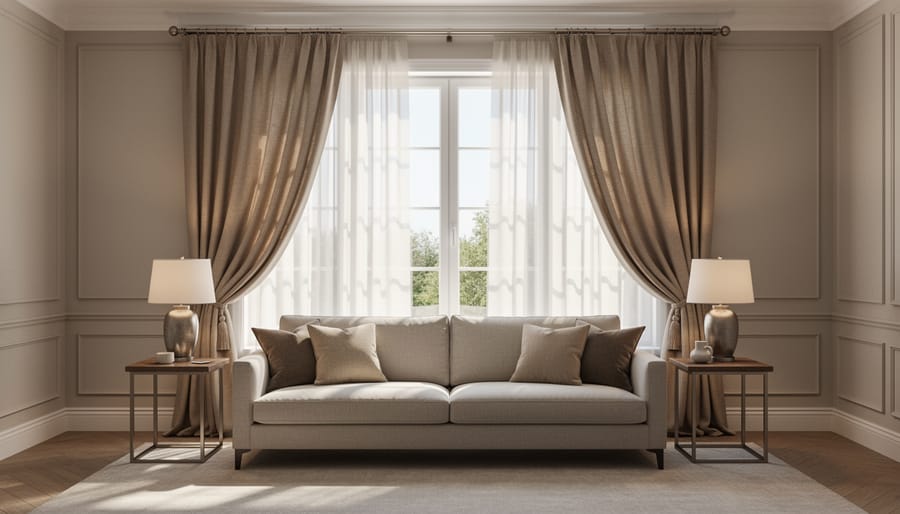
Traditional interiors come alive through careful layering of textiles and patterns. Start with a foundation rug in a classic motif, an oriental pattern, botanical design, or geometric medallion, anchored beneath your main seating arrangement. The rug establishes your room’s color story and grounds heavier furniture pieces while adding essential warmth underfoot.
Window treatments deserve substantial presence in traditional rooms. Floor-length drapery panels in silk, velvet, or linen frame windows with architectural weight. Pair solid panels with a patterned valance, or reverse the approach with printed drapes and solid trim. Lined panels hang properly and block light effectively, creating the polished look traditional style demands.
Upholstery offers your most impactful pattern opportunity. A damask sofa or floral armchair becomes a room’s focal point, but balance bold upholstery with quieter surrounding pieces. If your sofa wears a strong pattern, keep side chairs in solids or subtle textures. Conversely, a solid sofa welcomes patterned accent chairs that inject personality without overwhelming the space.
Throw pillows and decorative cushions complete the layering process. Mixing textures matters as much as combining patterns, pair smooth silk with nubby linen, crisp cotton with plush velvet. When layering patterns, vary scale and maintain a consistent color palette. A large floral pairs beautifully with a small-scale stripe or check, while a bold damask balances with understated plaids or tone-on-tone prints.
The traditional approach allows three to four patterns per room, provided they share common colors and differ in scale. Let one pattern dominate, a second support, and a third accent. This hierarchy creates visual interest without chaos, delivering the depth and richness that defines authentic traditional interiors.
DIY Solutions to Achieve Traditional Style on Any Budget
Traditional style doesn’t require deep pockets or designer connections. It demands patience, attention to detail, and a willingness to get your hands dirty. The best traditional rooms often combine inherited pieces, thrift store rescues, and clever DIY projects that mimic high-end finishes at a fraction of what you’d spend buying new.
Start with furniture that has good bones but tired finishes. An outdated oak dresser with dovetail joints and solid construction can transform into a traditional showpiece with the right approach. Strip away orange-toned polyurethane, sand it smooth, and apply a rich stain in mahogany or walnut. If you’re working with laminate or pine pieces, explore chalk paint ideas to create an aged, heirloom appearance. Chalk paint adheres without primer, and you can layer colors or distress edges to suggest decades of use.
Upholstered pieces present another opportunity. Rather than replacing an entire sofa, recover just the seat cushions in a traditional damask or velvet. Slipcovers in classic linen or cotton duck can hide dated patterns while adding tailored sophistication. You can also tackle a DIY headboard using reclaimed wood or MDF trimmed with decorative moulding, then stained or painted to coordinate with your bedroom furniture.
For window treatments, making your own curtain panels saves considerably while letting you choose exactly the fabric weight and pattern you need. Traditional rooms favor floor-length panels in heavier fabrics. Purchase quality decorator fabric by the yard, hem the edges, and add clip rings or sew simple rod pockets. The labor is straightforward, and the results look custom.
Here are practical DIY projects that deliver authentic traditional character:
- Apply wood grain tool techniques over painted surfaces to simulate mahogany or walnut grain patterns on budget furniture.
- Swap modern hardware for brass or bronze pulls and knobs on cabinets, dressers, and nightstands, instant traditional upgrade.
- Sew pillow covers from remnant damask, toile, or tapestry fabrics to layer pattern and texture on sofas and beds.
- Create faux crown moulding using lightweight polyurethane trim pieces, then paint to match your walls for architectural interest.
- Refinish thrift store picture frames with gold leaf or antique bronze spray paint to display art and mirrors in traditional style.
The key is respecting traditional craftsmanship principles. Take time with prep work, use quality materials where they matter most, and don’t rush the finish. A well-executed DIY piece that required effort and care fits traditional interiors better than mass-produced items that merely look the part.
Drawing Inspiration from Prestigious Sources
Studying traditional interiors in their most refined forms sharpens your ability to execute the look at home. Prestigious design magazines like *Architectural Digest*, *Veranda*, and *House Beautiful* regularly feature traditional rooms that balance opulence with livability. Pay attention to how professionals layer textures, arrange furniture to maintain sight lines, and mix antique pieces with newer upholstery.
Historic house museums offer another rich vein of inspiration. Walking through Georgian manor houses, Federal-era estates, or Colonial Revival homes reveals how traditional design actually functions in three dimensions. Notice the ceiling heights that make tall case pieces work, the window treatments that frame views without blocking light, and the subtle repetition of motifs across a room.
Museum decorative arts collections showcase the craftsmanship standards that traditional furniture should aspire to. Examining period pieces helps you recognize quality joinery, authentic hardware styles, and proper proportions when you’re shopping for reproductions or vintage finds.
Design showrooms, even high-end ones, welcome browsers. You don’t need to buy a $5,000 dining table to study its construction, feel the weight of solid mahogany, or understand why dovetail joints matter. Take photos (where permitted), note dimensions, and observe how showrooms stage vignettes.
The adaptation trick is simple: identify the core principle behind an upscale design choice, then execute it with accessible materials. A magazine spread might feature custom silk drapery, but you can achieve similar warmth and formality with quality cotton sateen panels you sew yourself.
Common Mistakes to Avoid When Going Traditional
The fastest way to undermine an otherwise beautiful traditional room is to repeat the same mistakes that trip up even experienced decorators. Let’s walk through the most common pitfalls and how to sidestep them.
Overcrowding your space with too much heavy furniture ranks at the top. Traditional pieces, carved armoires, tufted sofas, wingback chairs, carry visual weight. When you pack them tightly together, the room feels oppressive rather than elegant. Leave breathing room around each piece. A good rule: if you can’t walk comfortably around your furniture without turning sideways, you’ve gone too far.
Mismatched wood tones create visual chaos faster than almost anything else. You don’t need everything in the same finish, but you do need a coherent strategy. Stick to warm tones together (cherry, mahogany, walnut) or cool tones together, and limit yourself to two or three wood finishes per room. That antique oak desk won’t play nicely with your cherry dining set unless you intentionally bridge them with accessories.
The matchy-matchy trap catches people who think traditional means everything coordinates perfectly. When your sofa, pillows, curtains, and rug all share the exact same pattern or color, the room feels staged rather than lived-in. Mix your patterns, pair a floral with a stripe, combine damask with a solid velvet, and vary your textures across the space.
Scale mistakes show up everywhere. Oversized furniture dwarfs small rooms, while dainty pieces disappear in large spaces. Before you commit to that grand sectional, measure your room and consider proportion. Traditional style rewards balance, not extremes.
Traditional home decor isn’t just surviving the fast-paced churn of design trends, it’s thriving precisely because it offers something those trends can’t: permanence, craftsmanship, and a sense of home that deepens over time. What we’re seeing isn’t nostalgia for its own sake, but a thoughtful return to interiors that prioritize quality, comfort, and personal meaning over what’s merely fashionable this season.
The beauty of traditional style lies in its flexibility. You’re not recreating a museum period room or committing to rigid historical accuracy. Instead, you’re building a foundation of classic furniture, timeless materials, and layered textiles, then making it yours through the art, books, textiles, and objects that reflect your life. A well-chosen Chesterfield sofa anchors a room for decades; the velvet you choose and the vintage rug you layer beneath it make the space uniquely yours.
As you consider bringing traditional elements into your home, focus on the pieces that matter most to you. Start with one anchor furniture item, a solid wood dining table, a quality upholstered chair, and build from there. Mix inherited pieces with thoughtful new acquisitions. Let your rooms evolve gradually rather than rushing to complete a look overnight.
We’re here to support that journey. Browse our furniture guides, DIY tutorials, and design inspiration to discover how traditional style adapts to real homes and real budgets, creating spaces that welcome you home every single day.
