

Exceptional customer service in the furniture industry boils down to solving problems before they escalate, treating delays like personal crises, and remembering that a sofa purchase represents months of savings and years of daily use. The best experiences share three qualities: representatives who listen without interrupting, solutions that exceed the original promise, and follow-through that doesn’t require customers to ask twice.
When you’re comparing patio furniture deals or investing in a statement dining table, the service you receive can transform a stressful transaction into something surprisingly pleasant. We’ve all heard the horror stories: damaged deliveries ignored for weeks, “final sale” policies wielded like shields, or customer service reps reading from scripts that never quite match your actual problem. But remarkable service exists too, and understanding what it looks like helps you recognize when a retailer truly values your business.
The examples that follow showcase real scenarios where furniture companies turned potential disasters into loyalty-building moments. You’ll see how one family’s destroyed sectional became a lesson in proactive communication, how a designer navigated a discontinued fabric with creativity rather than apologies, and how a small error in dimensions led to a complete room redesign at no extra cost. These aren’t fairy tales or marketing fantasies. They’re documented interactions that reveal the difference between companies that view service as an expense to minimize and those that treat it as their competitive advantage.
Whether you’re about to make a major furniture investment or you’re curious what separates mediocre retailers from exceptional ones, these stories offer a practical blueprint for what you should expect and, frankly, demand.
What Makes Customer Service Exceptional in Furniture Shopping

Furniture shopping differs from most retail experiences because the stakes are significantly higher. You’re not just buying a product, you’re investing in pieces that shape your daily comfort, reflect your personal style, and need to function properly for years. A sofa that looked perfect in the showroom might overwhelm your living room. Delivery windows can disrupt work schedules. Custom orders stretch across months, not days.
Exceptional service in this industry recognizes these complexities and addresses them proactively. It starts with consultants who ask about your actual space before suggesting anything. They want to know your measurements, your traffic patterns, how you really live in your home. Good service shows you products. Great service helps you visualize those products in your specific context, whether through room planning tools, augmented reality apps, or honest conversations about proportion and scale.
The financial investment creates another pressure point. Most people don’t casually drop two thousand dollars on a dining set without some anxiety. Memorable service acknowledges this reality. Staff who patiently explain construction quality, warranty terms, and care requirements without rushing you build genuine trust. They understand that transparent pricing, including delivery fees and assembly costs stated upfront, eliminates unpleasant surprises that sour the entire experience.
Delivery and logistics separate exceptional providers from mediocre ones. Standard service drops boxes at your door. Superior service confirms time windows, communicates delays immediately, protects your floors and doorways during the move, and ensures pieces arrive as promised. This applies whether you’re making general outdoor furniture buying decisions or selecting a statement piece for your bedroom.
The difference ultimately comes down to treating furniture purchases as relationships rather than transactions, recognizing that your satisfaction extends far beyond the point of sale.
The Design Consultant Who Saved a Living Room Disaster
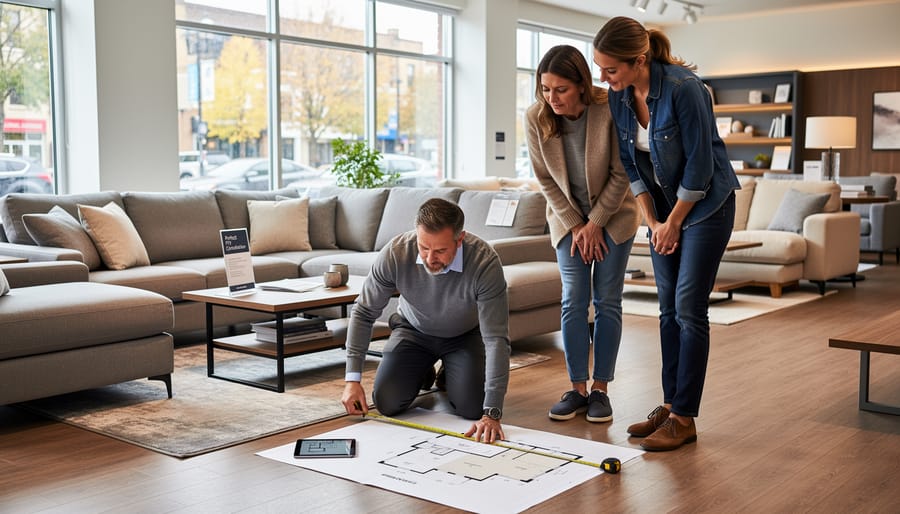
Sarah ordered what she thought was the perfect L-shaped sectional for her living room after measuring the space herself. When the delivery team arrived, the reality hit hard: the sectional was nearly two feet too long, blocking her fireplace and making the room feel cramped and awkward. Panicked, she called the furniture store expecting a complicated return process and weeks of waiting.
Instead, she got Marcus, a design consultant who immediately took ownership of the problem. Rather than simply processing an exchange, Marcus scheduled an in-home visit for the following day. He arrived with a tablet, measuring tape, and genuine concern. After measuring the space properly, he discovered Sarah had forgotten to account for the sectional’s arm width and had measured wall-to-wall instead of usable floor space.
Marcus didn’t make her feel foolish. He explained how common this mistake was and showed her three alternative configurations using the store’s room planning software right there in her living room. He explored options she hadn’t considered: a smaller sectional with the same seating capacity, a modular design that could adapt to her space, and even a different furniture arrangement that could accommodate her original choice if she moved her bookshelf.
The store’s exchange policy normally required customers to pay restocking fees, but Marcus waived them entirely since he was coming out for the consultation anyway. He coordinated the pickup of the oversized sectional and arranged delivery of Sarah’s new modular piece, which actually cost slightly less. The store credited the difference to her account.
What could have been a frustrating experience and a scathing online review became a story Sarah shared with friends. She returned to the same store six months later for bedroom furniture, specifically requesting Marcus’s help. The consultant’s willingness to visit her home, provide genuine design expertise, and take personal responsibility transformed a product mismatch into a relationship built on trust and competence.
When a Delivery Team Became Interior Movers

Sarah Chen had carefully planned her living room refresh around a new mid-century modern credenza she’d ordered online. When the delivery team arrived on a Tuesday morning, she expected the standard routine: boxes in, signature collected, goodbye. What happened instead turned into one of those service moments she still talks about years later.
The two delivery professionals, Marcus and Joel, immediately noticed Sarah struggling to clear space for the new piece. Her existing bookshelf sat exactly where the credenza needed to go, and she’d underestimated how heavy it was. Without hesitation, Marcus asked if she’d like help repositioning it. “We’re here anyway,” he said with a shrug, as if moving customer furniture beyond the delivery item was the most natural thing in the world.
But they didn’t stop there. As they assembled the credenza, Joel noticed Sarah’s sofa was pushed against the wall in a way that made the room feel cramped. He suggested floating it a few feet out to create better flow and define the conversation area. The team helped execute the rearrangement, explaining how proper spacing between furniture pieces makes a room feel larger and more intentional.
The entire interaction added maybe twenty minutes to their schedule, but the impact lasted far beyond that morning. Sarah gained a living room layout she wouldn’t have conceived on her own, along with practical insights about furniture placement she could apply throughout her home. The delivery team transformed what could have been a stressful morning of heavy lifting into a collaborative design moment.
This example highlights a crucial truth about customer service: the most memorable experiences happen when staff recognize unspoken needs. Marcus and Joel saw beyond their job description to what would genuinely help their customer. They turned a transactional delivery into a relationship-building opportunity, demonstrating that caring about the customer’s end result matters more than rushing to the next stop.
The Virtual Showroom Experience That Worked Better Than In-Person

Sarah lives three hours from the nearest furniture showroom, and her work schedule makes weekend trips nearly impossible. When she needed to furnish her newly renovated home office, she expected the usual compromise: ordering online based on photos and hoping for the best.
Instead, she contacted a furniture retailer that had recently expanded their virtual consultation program. Within 24 hours, a design specialist named Marcus scheduled a video call. During their first session, Marcus asked Sarah to walk him through her space with her phone camera, discussing natural light, existing décor, and how she actually worked at her desk. He took screenshots and measurements, treating her home with the same attention he would give an in-person visit.
What happened next surprised Sarah. Marcus sent her a personalized selection of desks and chairs with detailed explanations of why each piece suited her needs. But the service went further:
- One-on-one video consultations where Marcus demonstrated furniture features and answered questions in real time
- Access to an augmented reality app that placed true-to-scale furniture models in her actual room through her phone
- Complimentary fabric swatches and wood finish samples delivered to her door within three days
- A digital room plan showing multiple layout options with exact measurements and traffic flow considerations
Sarah placed the samples against her walls, tested them in different lighting throughout the day, and sent photos back to Marcus. He adjusted his recommendations based on her feedback, explaining how certain finishes would age and which fabrics could handle her cat’s presence.
The technology impressed her, but Marcus made the difference. He remembered details from previous conversations, followed up without being pushy, and genuinely seemed invested in her satisfaction. When her desk arrived, it fit perfectly, not just physically, but aesthetically and functionally.
Sarah never stepped into a showroom, yet she felt more confident in her purchase than she had with any previous furniture buy. The virtual experience wasn’t a substitute for in-person shopping; it was actually better.
How a Small Boutique Handled a Custom Order Delay
Sarah fell in love with a mid-century credenza at a local boutique in Portland, ordering a custom walnut finish with brass hardware to match her dining room’s aesthetic. The quoted delivery was eight weeks, but at week six the owner called personally to explain that their artisan workshop had discovered a flaw in the wood grain and refused to compromise quality.
Rather than making excuses, the boutique immediately offered three options: wait another four weeks for a flawless piece with a 15% discount, switch to a ready-made version in a slightly different finish at the original timeline, or cancel with a full refund plus a $100 credit toward future purchases. They sent photos of the wood issue and the replacement materials, explaining exactly what caused the delay.
Sarah appreciated the honesty but felt uncertain about waiting. The owner didn’t push for a decision. Instead, she emailed curated room style inspiration showing how both the original walnut and an alternative teak finish could work in Sarah’s space, based on photos Sarah had shared during the initial consultation.
The boutique followed up weekly with progress photos from the workshop, showing the new wood selection, the construction process, and the hardware installation. When the credenza finally arrived, ten weeks late, it included a handwritten note from the craftsman explaining his commitment to the piece and a small wooden trinket box as an apology gift.
Sarah later told friends that the delay became a non-issue because she never felt ignored or misled. The transparency turned a potential complaint into a story she shares as proof of the boutique’s integrity, and she’s since returned for a matching console table.
The Return That Wasn’t Really About the Furniture
Sarah walked into the boutique furniture store on a Saturday morning, determined to return the velvet armchair she’d purchased two weeks earlier. She had the receipt ready and a carefully rehearsed explanation about the color not working in her space. But when she approached the counter, something in her hesitation caught the attention of Maya, one of the store’s design associates.
Instead of immediately processing the return, Maya asked a simple question: “Can you tell me about your room?” Sarah’s shoulders relaxed, and the real story came out. She loved the chair itself but felt paralyzed by indecision. Should she commit to the jewel-toned velvet, or play it safe with something neutral? Was she making her living room too bold? Would she regret this choice in six months?
Maya recognized this wasn’t buyer’s remorse about quality or comfort. This was design anxiety. Rather than losing a sale, she invited Sarah to sit down with fabric swatches and her phone photos of the space. Together, they explored how the chair could anchor different looks. Maya pulled inspiration images showing similar pieces styled confidently, discussed how accent pillows could bridge the chair with existing furnishings, and even sketched quick layout options.
She also showed Sarah examples of customers who’d successfully embraced both dramatic statement pieces and those who’d created a traditional decor look with similar silhouettes in subdued tones, helping her see that either direction was valid.
Twenty minutes later, Sarah left with her chair, a throw pillow that tied everything together, and newfound confidence in her design instincts. The return form sat unused in Maya’s drawer.
Lessons From These Experiences: What Your Furniture Provider Should Offer
The furniture shopping experiences we’ve looked at reveal clear patterns about what transforms a simple purchase into a genuinely positive experience. These aren’t abstract ideas, they’re practical standards you can use to evaluate any furniture provider before spending your hard-earned money.
First, notice how every memorable interaction involved someone who truly listened. The design consultant understood spatial challenges, the delivery team picked up on frustration cues, and the boutique staff recognized emotional uncertainty behind a return request. When you’re researching furniture stores, pay attention to whether staff ask questions about your space, lifestyle, and concerns rather than immediately pushing products.
Transparency emerged as another consistent thread. The boutique handling the custom order delay didn’t hide problems or make false promises, they communicated honestly and offered real solutions. Before committing to a purchase, especially for custom pieces or handcrafted decor ask how the company handles delays or issues. Their answer tells you everything about their integrity.
Look for these specific customer service features when evaluating furniture providers:
- Free or accessible design consultation services, whether in-person or virtual
- Clear communication channels with real people, not just automated responses
- Flexible delivery options including white-glove service and timing choices
- Reasonable return policies with transparent restocking fees and timelines
- Post-purchase support for assembly, care instructions, and troubleshooting
The virtual showroom example showed that modern technology should enhance personal service, not replace it. Room visualization tools and mailed samples are wonderful, but they work because a real consultant guided the process. Don’t settle for companies that hide behind technology to avoid genuine customer interaction.
Finally, consider the extras that weren’t required but were offered anyway. The delivery team rearranging furniture and the staff providing styling advice went beyond their job descriptions. These gestures signal a company culture that values customer satisfaction over rigid procedures. Read recent reviews specifically mentioning how staff handled problems, that’s where true character shows.
These real-world examples reveal a fundamental truth: exceptional customer service isn’t just about solving problems. It’s about creating moments that teach us what’s possible when businesses genuinely care about outcomes beyond the sale.
Every interaction between a furniture retailer and a customer becomes a learning opportunity. Businesses discover what truly matters to their clients, refining their approaches with each conversation. Meanwhile, you as a shopper learn what standards to expect and which companies deserve your trust and investment.
The furniture stores that stand out don’t view service as a department. They see it as their entire philosophy, woven into every decision from hiring staff to handling complaints. These are the businesses worth seeking out, even if they’re not the cheapest option or the closest location.
You have more power than you might realize. Your choice of where to shop sends a message about what you value. When you support companies that prioritize personalized consultations, transparent communication, and genuine problem-solving, you’re voting for a better shopping experience industry-wide.
Don’t settle for mediocrity simply because it’s convenient. Ask questions before you buy. How do they handle delivery issues? What’s their approach to design challenges? Can they provide references or examples of how they’ve helped other customers?
High-quality service should never feel like a luxury add-on. It’s what you deserve when making significant investments in your home. Choose businesses that demonstrate they understand this, and watch how your furniture shopping transforms from stressful transactions into collaborative, even enjoyable experiences that leave you confident in every piece you bring home.
