

Your patio needs furniture that withstands weather extremes while creating a comfortable outdoor room where you’ll actually want to spend time. The right patio furniture comes down to matching materials to your exposure level (full sun, partial cover, or fully enclosed), choosing pieces scaled to your square footage, and selecting construction quality that survives your climate without constant maintenance. With homeowners increasingly treating patios as true living space extensions, the latest outdoor furniture trends lean toward modular seating that adapts to both intimate dinners and weekend gatherings, weather-resistant fabrics that rival indoor comfort, and mixed-material designs that bring personality beyond generic resin sets.
The difference between a patio setup that looks tired by next season and one that becomes your favorite room starts with understanding which furniture types handle your specific conditions. Fully exposed patios demand aluminum frames and solution-dyed acrylic cushions, while covered spaces open up options for fully upholstered pieces and natural materials like teak or wicker when paired with protective covers. Shopping smart means focusing on construction details like welded joints over screwed assemblies, UV-resistant finishes, and quick-dry cushion cores rather than getting distracted by initial price tags that don’t account for replacement costs.
What to Consider Before Buying Patio Furniture
Exposure Level and Protection
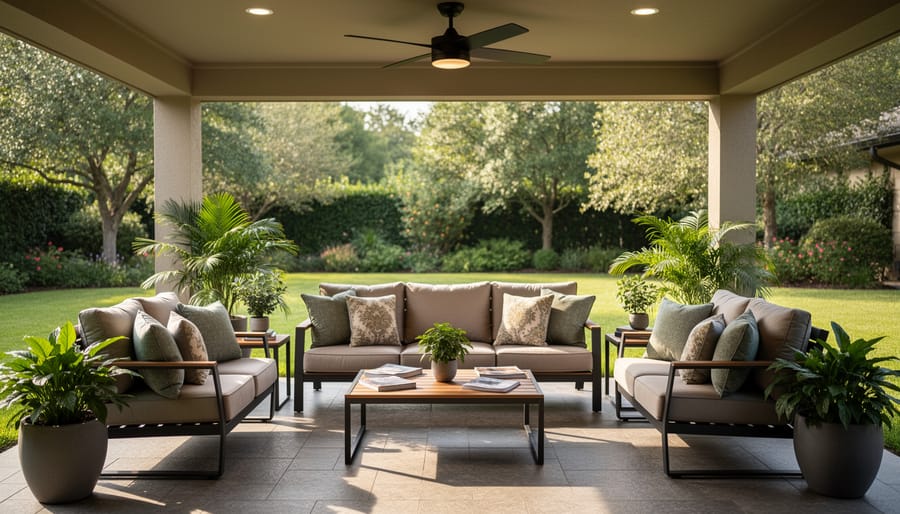
Your patio’s protection level shapes every furniture decision you’ll make. Covered patios, verandas, and lanais shield furniture from direct rain, snow, and harsh sun, which opens up material choices you can’t use in fully exposed spaces. Think of it as the difference between furniture that weathers every storm and furniture that gets a roof over its head.
In fully open patios, you need materials built for battle: powder-coated aluminum frames, marine-grade wicker, outdoor-specific fabrics that dry quickly and resist fading. Everything stays outside year-round with no shelter, so durability trumps comfort features. Cushions need outdoor fabric that sheds water rather than absorbing it.
Covered spaces change the game. A veranda’s overhang or a lanai’s screening blocks most weather, letting you use fully upholstered pieces you’d never risk in the open. The catch? You still need proper furniture covers when rain blows sideways or humidity spikes. These protected areas can handle indoor-outdoor hybrids, softer cushioning, and fabrics with more texture and comfort.
Completely enclosed sunrooms and pool houses blur the line entirely. With four walls and a roof, you can use furniture that would fail outdoors, though moisture-resistant materials still make sense near pools.
Space and Layout Needs
Measure your patio before you shop. Start with length and width, then map traffic flow patterns and door clearances. Pool decks need quick-dry materials and furniture that won’t block access to the water. Gardens work best with lightweight pieces you can shift as plantings change through the season. Sunrooms handle traditional upholstery since they’re fully protected, giving you more material options than open patios.
Leave at least 30 inches between furniture pieces for comfortable movement. For dining sets, add three feet around the table so chairs can pull out without hitting walls or planters. Sketch your layout on graph paper or use painter’s tape on the actual patio to test configurations before you buy. This prevents the common mistake of choosing furniture that looks perfect but doesn’t fit how you actually use the space.
Types of Patio Furniture Compared
Conversation Sets vs. Modular Seating
Traditional conversation sets anchor your patio with a cohesive look straight out of the box. These fixed groupings, typically a sofa, two chairs, and a coffee table, deliver instant coordination and take the guesswork out of matching pieces. They work beautifully on smaller patios where you need a defined seating area and won’t rearrange often. The trade-off? You’re locked into that configuration, and adding or removing pieces later means hunting for compatible styles.
Modular seating flips this script entirely. Individual sections, armless chairs, corner pieces, ottomans, let you build exactly the layout your space needs, then reconfigure it when your needs change. Hosting a party? Push sections together for one long sofa. Need two separate conversation areas? Split the modules apart. This flexibility shines on larger patios, around pool decks, or in spaces that serve multiple purposes throughout the season.
Choose traditional sets when you value design cohesion and have a clear, stable layout in mind. Go modular when your patio sees varied use, when you might move furniture for different gatherings, or when you want the freedom to add sections over time as budget allows.
Specialty Seating Options
Lounge chairs work well for reading and relaxing, while rockers add gentle motion perfect for morning coffee on a covered patio. Adirondack chairs bring classic style and surprisingly good lumbar support, though their wide armrests make them space hogs on smaller patios. Hammocks need sturdy anchoring points and suit casual lounging, not structured seating arrangements.
Chaise lounges let you stretch out fully, making them ideal poolside or beside outdoor fire pit ideas where you’ll spend extended time. Daybeds create outdoor napping spots and double as extra seating for gatherings, but they demand significant square footage and work best on covered patios or in sunrooms where cushions stay dry.
Match your furniture to actual use patterns. If you’ll read for hours, prioritize comfort over looks. If entertaining drives your patio plans, flexible pieces that rearrange easily beat single-purpose loungers. Test before buying: sit, recline, and shift positions to confirm the furniture supports how you’ll really use the space, not just how it photographs.
Furniture and Cushion Materials That Last
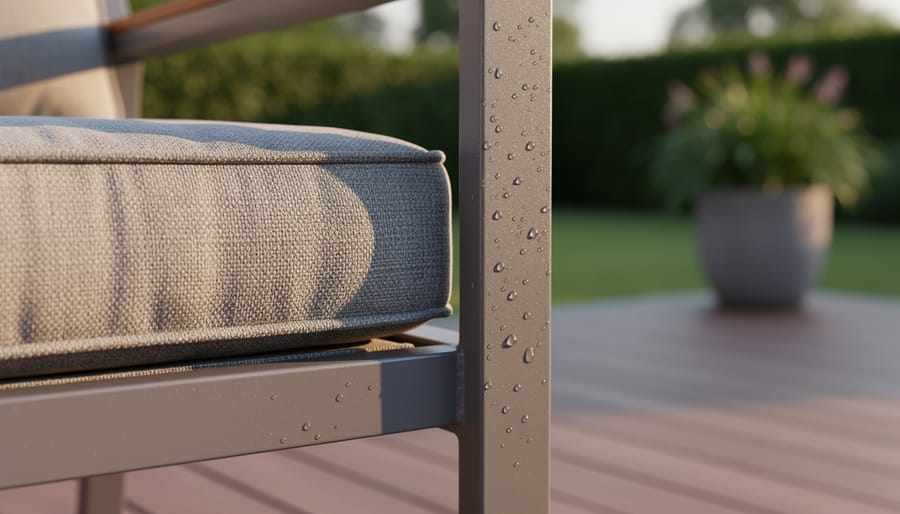
Picking furniture that survives seasons of sun, rain, and temperature swings comes down to understanding how materials perform in your specific setup. A covered veranda protects pieces from direct weather exposure, letting you use fabrics and finishes that wouldn’t last on a fully open patio. Knowing what your space offers, and what it doesn’t, helps you choose long-lasting furniture that won’t disappoint after a single summer.
Frame materials determine how furniture ages. Aluminum resists rust and handles moisture well, making it a solid choice for open patios and pool decks where rain and humidity are constant. Teak and eucalyptus develop a natural silver-gray patina over time but resist rot and insect damage without much maintenance. Wrought iron offers classic style and durability, though it needs powder-coated finishes to prevent rust in wet climates. All-weather wicker wraps a rust-resistant metal or resin frame with synthetic weave that mimics natural rattan without the splitting and fading.
Cushion fabrics separate outdoor pieces from indoor ones. Solution-dyed acrylic fabrics resist fading and mildew, dry quickly after rain, and handle scrubbing without losing color. These work on covered patios and verandas where furniture gets indirect weather exposure. Polyester blends cost less but fade faster under direct sun and retain moisture longer, which can lead to mildew in humid areas. Fully upholstered outdoor furniture, pieces with fabric over the entire frame, can work on covered patios and lanais when you use proper furniture covers between uses, but they’re not built for open exposure.
Quality construction reveals itself in the details. Look for these markers when evaluating pieces:
- Welded aluminum frames instead of bolted joints that loosen over time
- Mortise-and-tenon joinery in wooden frames for strength without visible hardware
- UV-rated fabrics with colorfastness grades of 1,000+ hours for fade resistance
- Powder-coated or marine-grade finishes that seal metal from moisture
- Stainless steel or coated hardware that won’t rust when wet
Weather-resistant finishes protect the base material. Powder coating creates a hard shell over metal that resists chipping and rust better than paint. Marine-grade sealants on wood block moisture penetration while letting the grain show. Resin wicker needs UV inhibitors baked into the material, not just applied as a surface treatment, to prevent brittleness and cracking after a few seasons. Check whether cushion covers have zippers for easy removal and washing, covers you can’t clean quickly become permanent stains.
Smart Patio Furniture Recommendations for Different Spaces
Matching furniture to your outdoor space means thinking beyond style and zeroing in on protection level and how you’ll actually use the area. A fully open patio demands weather-resistant materials like aluminum frames with quick-dry cushions or all-weather wicker, since rain and sun hit everything directly. Modular seating works particularly well here because you can rearrange pieces for gatherings and shift them under an overhang during storms. Skip fully upholstered options unless you’re committed to storing cushions indoors after every use.
Covered verandas and lanais give you more flexibility with materials and upholstery since the roof blocks direct rain and reduces sun exposure. You can mix traditional sofa sets with plush outdoor fabrics and add lounge chairs or rockers for layered seating zones. The key advantage is that furniture covers extend the life of upholstered pieces between uses, letting you create a more indoor-like comfort level without constant maintenance.
Pool decks benefit from materials that handle splashes and resist mildew, making poolside teak furniture or powder-coated aluminum with mesh-back chaise lounges excellent choices. Stick with furniture that dries quickly and won’t stain from sunscreen or chlorine. Daybeds and conversation sets work if placed far enough from the splash zone, but keep primary poolside seating simple and water-tolerant.
Gardens and sunrooms sit at opposite ends of the protection spectrum. Garden furniture needs the same weather resistance as open patios since it’s exposed to the elements, though you might choose lighter-weight pieces you can move around plantings. Sunrooms and fully enclosed pool houses, by contrast, let you use nearly any outdoor furniture type since they’re completely protected, even fully upholstered modular systems that would fail on an open deck thrive here without covers.
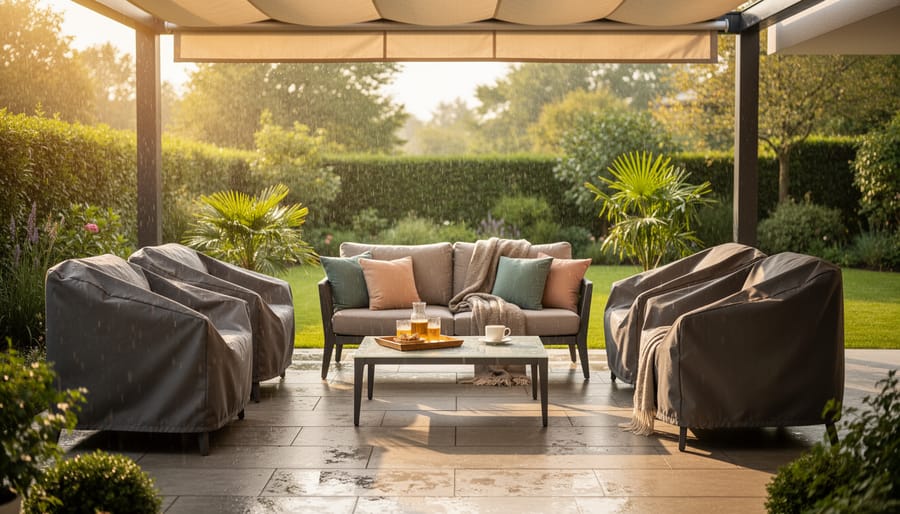
For any semi-protected space, investing in breathable, UV-resistant furniture covers transforms what you can keep outside year-round. They let you mix comfort-focused upholstered pieces into covered patios and verandas while protecting your investment during off-seasons or extended periods without use.
Mistakes to Avoid When Choosing Patio Furniture
Choosing patio furniture without a clear plan often leads to regret, wasted money, and pieces that don’t last a season. Most mistakes come down to mismatching your furniture to your actual space and climate conditions.
Here are the top pitfalls to avoid:
- Picking delicate materials for fully exposed patios, wicker and fully upholstered pieces won’t survive constant rain and sun
- Skipping measurements and ending up with furniture that overwhelms a small patio or floats awkwardly in a large one
- Forgetting to plan for covers and storage, then watching your investment fade and deteriorate over winter
- Choosing style over durability in harsh climates, that beautiful teak set needs maintenance you might not have time for
- Buying without testing comfort first, especially for seating you’ll actually use for hours
The exposure-material mismatch causes the most buyer’s remorse. If your patio sits fully open to weather, you need outdoor-specific fabrics and rust-resistant frames, not indoor-outdoor pieces better suited to covered verandas. Check how protected your space actually is before you fall in love with a particular look.
Scale problems sneak up on people who eyeball dimensions instead of measuring. A sectional that worked in the showroom can block walkways or make a narrow patio feel like a hallway. Sketch your layout, leave clearance for chairs to pull out, and remember you need room to move around the furniture.
Storage matters more than people think. Even weather-resistant furniture lasts longer with covers, and cushions need protection from heavy snow and ice. If you don’t have a shed or garage space, factor in stackable designs or furniture that stores compactly. Leaving everything exposed year-round, even quality pieces, cuts their lifespan significantly.
DIY Styling Ideas for Your Outdoor Patio
Once you’ve selected the right patio furniture, styling transforms your outdoor space into an extension of your home. Start with an outdoor rug to anchor your seating area and define zones, layer a smaller patterned rug over a larger neutral one for depth and visual interest. This technique works especially well on covered patios where rugs stay protected from direct weather exposure.
Mix cushions and pillows in varying sizes and patterns to create a luxurious outdoor look without the luxury price tag. Choose outdoor fabrics in complementary colors, then vary the scale of patterns, pair large florals with thin stripes or geometric prints. Swap out lighter colors for richer tones as seasons change to keep your patio feeling fresh.
Lighting creates ambiance after sunset. String café lights overhead for soft, flattering light, then add lanterns or battery-powered LED candles on side tables. Solar stake lights tucked among planters provide subtle ground-level glow without running electrical lines.
Strategic planter placement frames your furniture while adding greenery and privacy. Tall planters with ornamental grasses or small trees can screen neighbors’ views, while clustered pots of varying heights create a garden feel around conversation sets. On covered verandas, you can even incorporate traditional houseplants that wouldn’t survive in fully open spaces.
Create distinct outdoor room zones by grouping furniture purposefully. Position a fire pit table set for evening gathering separate from a daybed or chaise lounge area designated for afternoon reading. This approach makes larger patios feel curated rather than scattered, giving each area its own identity and function.
Frequently Asked Questions
Can you use indoor furniture on a covered patio?
It depends on how protected the space is. Fully upholstered indoor furniture can work on well-covered patios, verandas, and lanais if you use proper furniture covers when not in use. For completely enclosed spaces like sunrooms and pool houses, indoor pieces are fine without additional protection.
What’s the difference between outdoor and indoor fabrics?
Outdoor fabrics are solution-dyed and treated to resist moisture, mildew, fading, and temperature extremes. Indoor fabrics lack these protections and will deteriorate quickly when exposed to rain, humidity, and UV rays, even on covered patios.
How do you protect patio furniture in winter?
Use weatherproof furniture covers rated for your climate, and store removable cushions in a dry garage or shed. If possible, move lightweight pieces to a sheltered spot or bring them indoors during severe weather to extend their life.
How do you clean outdoor cushions?
Brush off loose dirt, then spot-clean with a mild soap and water solution using a soft brush. Rinse thoroughly and let air dry completely before putting covers back on to prevent mildew growth.
The answers above address the practical concerns most homeowners face when buying patio furniture. Protection strategies vary based on your space type and climate, but the core principle stays the same: match your furniture materials and maintenance routine to the level of exposure your patio experiences. When you choose pieces designed for outdoor use from the start and care for them properly, you’ll get years of reliable service without constant replacement.
Choosing the right patio furniture transforms your outdoor space into a true extension of your home. The key is matching furniture to how your patio actually functions, whether that’s a fully open deck facing the elements or a covered veranda that lets you expand your upholstery options. When you understand your exposure level and protection needs, material decisions become straightforward rather than overwhelming.
Start with the basics: measure your space, consider how you’ll use it, and select materials that suit your patio’s protection level. From there, mix in your personal style through cushion choices, outdoor rugs, and lighting that creates the atmosphere you want. The beauty of outdoor furniture in 2026 is the range available, modular pieces that adapt as your needs change, specialty seating like rockers and daybeds for specific uses, and quality construction that lasts through seasons.
Your patio deserves the same attention to comfort and style as your indoor rooms. Take time to test furniture for actual comfort, avoid common mistakes like skipping measurements or choosing style over durability for exposed spaces, and don’t be afraid to enhance your setup with DIY touches. The result? An outdoor living space you’ll actually use, season after season.
